
Mobile App Development
for Business
We develop mobile applications for iOS and Android that help businesses increase sales, automate processes, improve customer service and communicate with customers directly. We design the UX/UI, business logic, backend and APIs, integrate the app with CRM/ERP, POS, inventory and accounting systems, payment platforms, push notifications and analytics, and prepare it for publication on the App Store and Google Play.













Services
Solutions
for Mobile Applications
We help businesses create mobile applications—from research and UX/UI design to MVP development, backend, APIs, integrations and preparation for launch on the App Store and Google Play. We design each application as part of a broader digital ecosystem, not simply as a collection of screens.
We analyze the business objectives, target audience, competitors, functionality, iOS and Android platforms, user scenarios, integrations and technical limitations of the future application.
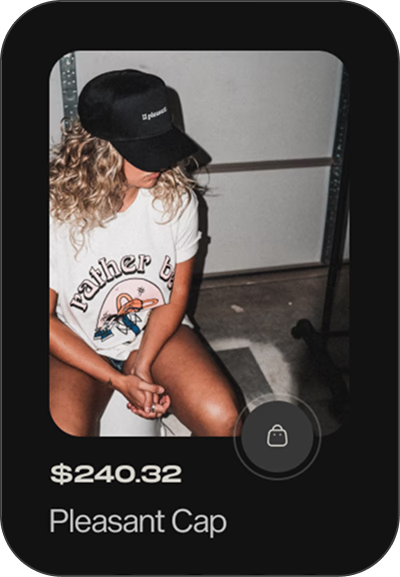
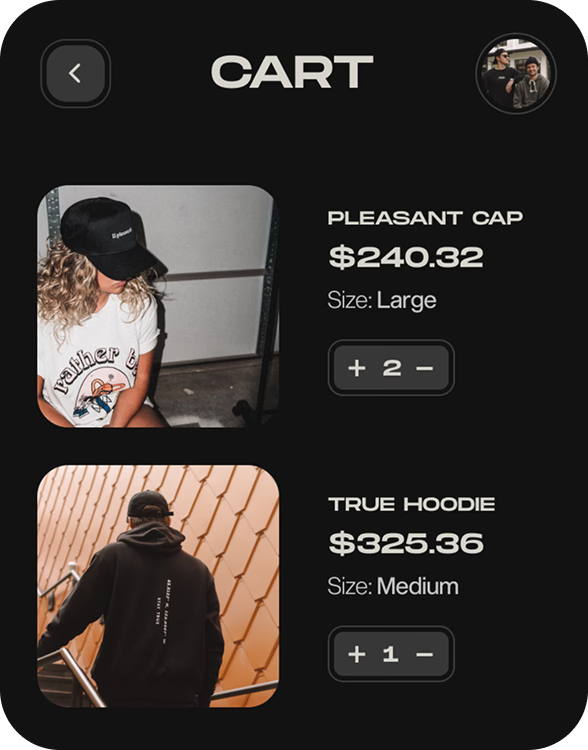
We design the mobile application structure, key screens, onboarding, navigation, user account, forms, interface states, error messages, push notification scenarios and adaptations for iOS and Android.
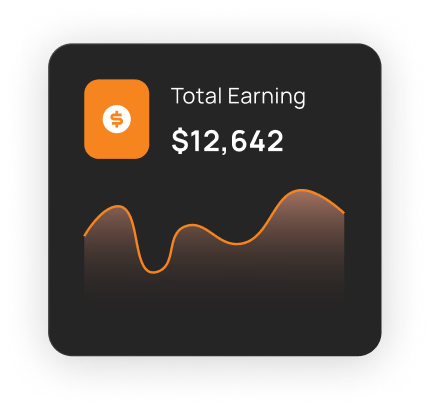
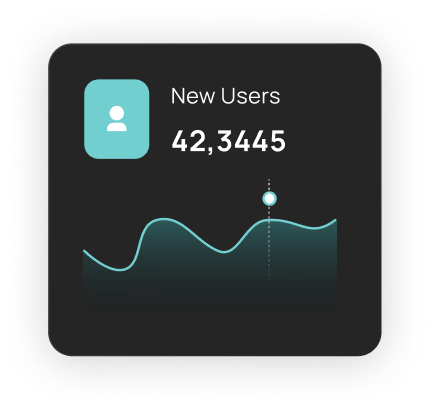
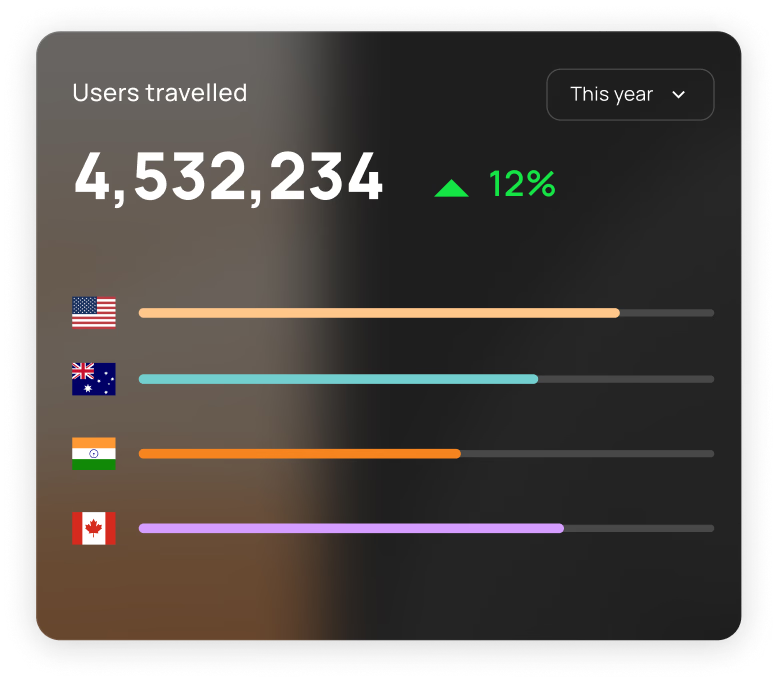

We help launch the first version of the mobile product with its core functionality, including authorization, key screens, backend, APIs, analytics.
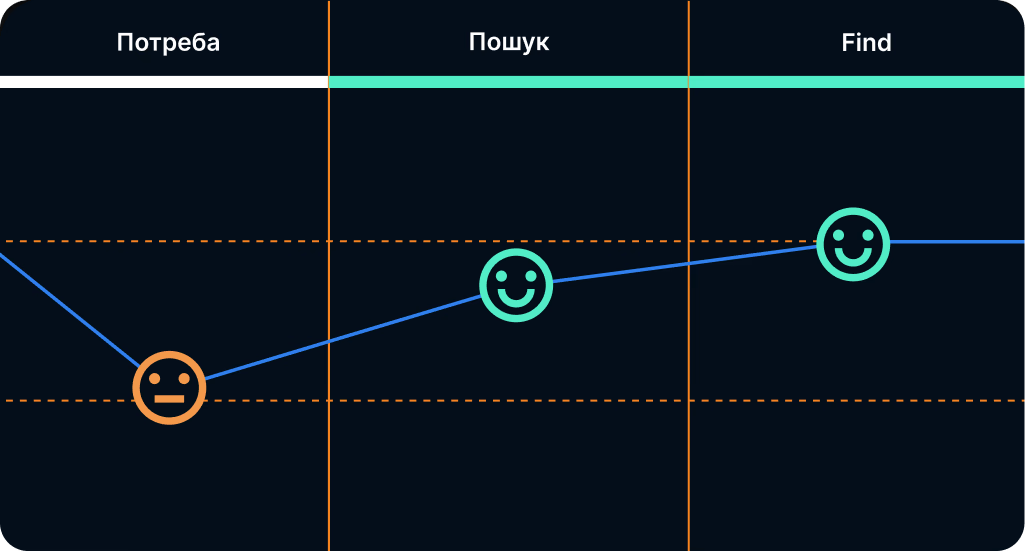
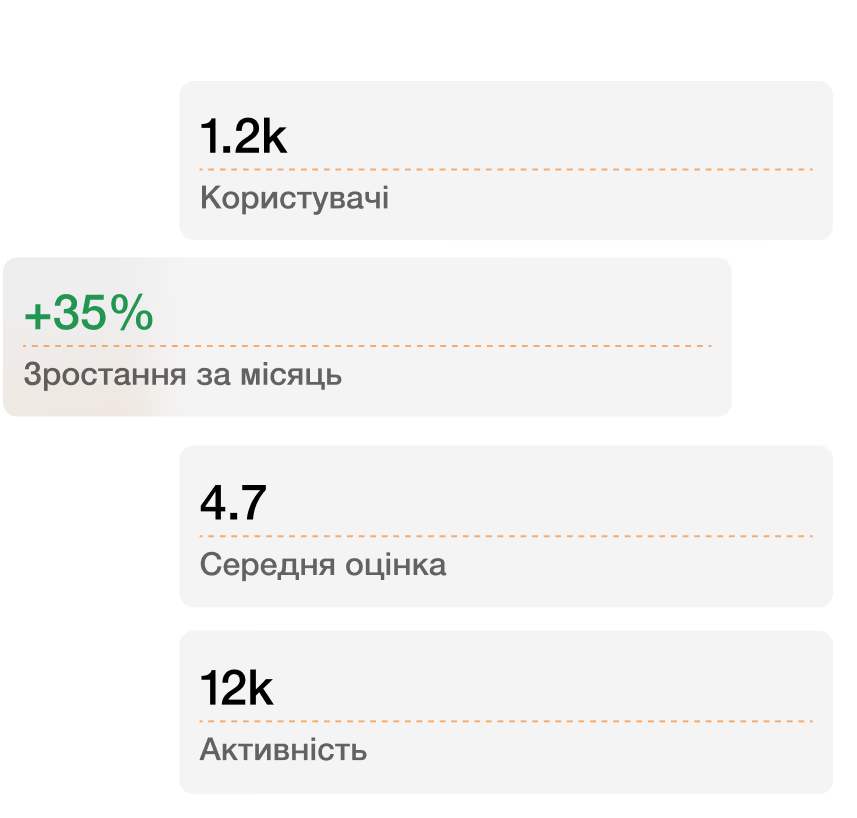
We review the mobile interface logic, usability of key scenarios, navigation, forms, CTAs, error handling and conversion points, and provide recommendations to improve the user experience.

Capabilities
What’s Included
in Mobile App Development
We design mobile applications as complete digital products—from UX/UI design and iOS and Android development to backend, APIs, integrations, push notifications, analytics, testing and preparation for publication on the App Store and Google Play.
Stages
Mobile App Development
Stages
We take the project from analyzing business objectives, the target audience and functionality to UX/UI design, iOS and Android development, backend, APIs, integrations, testing, publication on the App Store and Google Play, and further mobile app development.
We study the business model, target audience, competitors, key user scenarios, functionality, iOS and Android platforms, future integrations and the project’s technical limitations.
We design the mobile app structure, including onboarding, main screens, navigation, user accounts, forms, catalogue, shopping cart, payments, push notification scenarios and the logic of user interaction with the application.
We create the mobile app’s visual design based on the brand, user behaviour, a mobile-first approach, interface states, errors, empty screens and the specific requirements of iOS and Android.
We develop the mobile app frontend, backend, APIs, authorization, user accounts, push notifications, payments, database, administration panel and the product’s core business logic.
We connect the application with CRM and ERP platforms, POS, inventory and accounting systems, payment providers, delivery services, analytics, email and SMS services, push notification platforms and external APIs required for its operation.
We test stability, performance, authorization, forms, payments, push notifications, integrations and error handling, and prepare the mobile application for publication on the App Store and Google Play.
After launch, we help develop the mobile application by adding new functionality, integrations, personalization, loyalty programs, analytics, UX improvements and ongoing technical support.
Portfolio
Mobile
Apps and Digital Products
We showcase mobile applications, web applications, e-commerce platforms and B2B solutions where success depends not only on design and development, but also on business logic, UX/UI, backend architecture, APIs, integrations, analytics and future scalability.
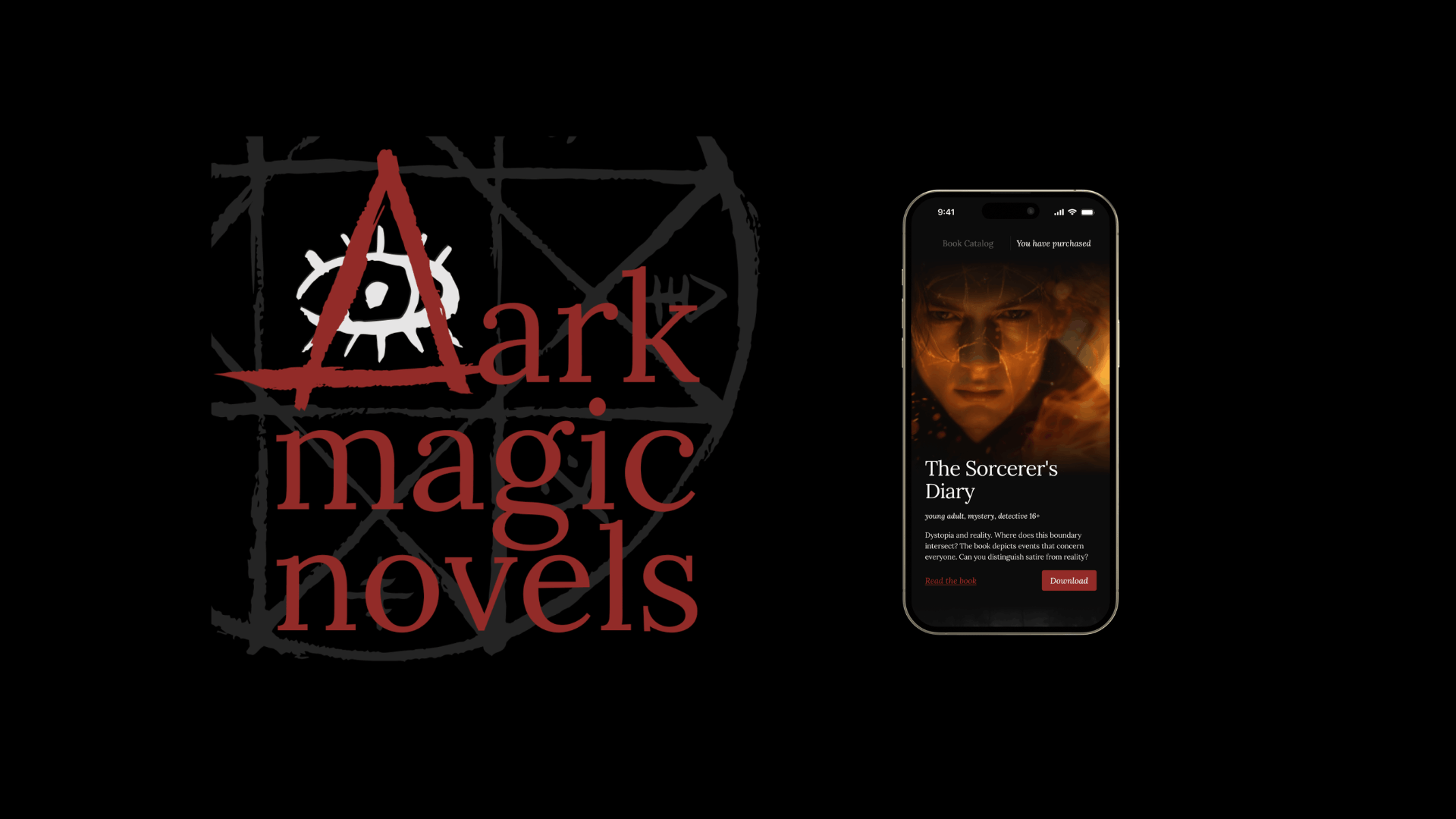
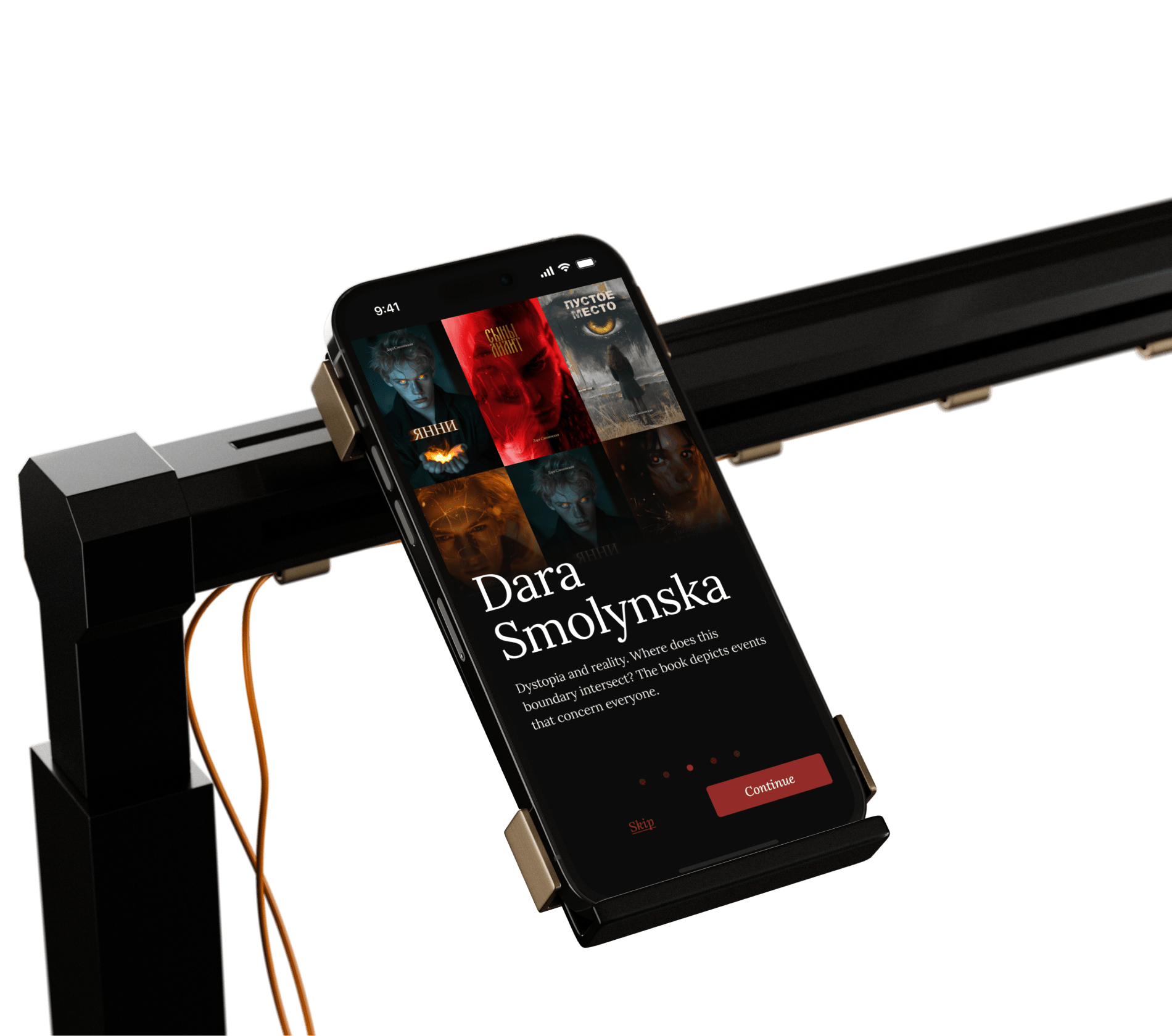
Dark Magic Novels is a mobile reading app that provides users with access to a collection of dark fantasy and supernatural novels in a convenient and immersive format.
Clients
Our
clients

Professional nail and beauty products brand

Premium skincare and cosmetics brand

Online platform for selling used cars

Professional makeup brand

Sports field line-marking technology company

Freight shipping and logistics service provider

Video conferencing and online meeting platform

Cybersecurity and digital protection solutions company

Car protection and detailing studio offering PPF, tinting, and vinyl wrap services

Music and entertainment production company

AI-powered mobile game monetization platform

Blockchain and Web3 technology company
Articles
Recent
articles
INCREATE
web production
agency
We craft fast functional web products of any scale. We translate your ideas into modern sites, platforms and applications.
Reviews
from our clients
All Reviews The result is a modern, scalable, and user-friendly website aligned with our business goals.

The design, animations, and excellent support made a strong impression.

INCREATE managed the project with a clear and transparent process. We really enjoyed working with their team.

FAQ
The cost of mobile app development depends on the number of platforms, the complexity of the UX/UI design, functionality, backend, APIs, integrations, authorization, payments, push notifications, analytics, administration panel and App Store and Google Play publication requirements.
An MVP mobile application may start at approximately $7,000–$12,000 when the goal is to validate a basic idea, create the key screens and launch the first version of the product. A cross-platform mobile application for a business may cost $12,000–$25,000, depending on its functionality, design, backend and integrations.
A complex mobile product with user accounts, payments, CRM/ERP, POS, inventory and accounting integrations, an administration panel and scalable architecture may cost $25,000–$40,000+. INCREATE provides an accurate estimate after analyzing the project requirements, user scenarios, technical specifications and planned integrations.
Turnkey mobile app development can include the complete production cycle: business requirements analysis, discovery, UX prototyping, UX/UI design, iOS and Android development, backend, APIs, database, administration panel, user accounts, push notifications, payments, analytics, integrations, testing and preparation for publication on the App Store and Google Play.
At the beginning of the project, we determine who the application is being created for, which problems it needs to solve, its primary user scenarios, the required platforms and whether it needs a backend, user accounts, CRM/ERP, POS, inventory and accounting integrations, payment systems or other external services.
We then define the application structure, screen logic, design, technical architecture and implementation plan. This approach allows us to create a complete digital product for the business rather than simply a collection of screens.
The mobile app development timeline depends on the complexity of the functionality, number of screens, platforms, design, backend, integrations and testing requirements. An MVP mobile application can usually take approximately two to three months when the initial version includes basic functionality for validating an idea or launching the first version of the product.
A medium-complexity business application for iOS and Android with UX/UI design, backend, APIs, user accounts, push notifications, payments or integrations may take three to five months.
A complex mobile product with an administration panel, CRM/ERP, POS, inventory and accounting integrations, multiple user roles, advanced business logic, analytics and scalable architecture may take five to six months or longer. The exact timeline is determined after analyzing the functionality, platforms and technical requirements.
The choice between native development, Flutter and React Native depends on the project requirements, budget, timeline, functionality and performance expectations. Separate native development for iOS and Android is suitable for complex products that require maximum performance, advanced use of device features, camera access, geolocation, multimedia, animations or operating-system-specific functionality.
Flutter and React Native are often suitable for business applications, MVPs, e-commerce apps, service platforms, customer portals, loyalty programs and internal systems. A cross-platform approach makes it possible to develop an application for iOS and Android more quickly using a shared codebase while optimizing the launch budget.
INCREATE helps select the technology that best fits the project. We consider not only the first release but also ongoing maintenance, scalability, integrations, performance and future product development.
Yes. For many projects, starting with a mobile app MVP is the most practical approach. An MVP allows you to launch the first version with essential functionality, validate the business hypothesis, test demand, attract initial users and understand which features the audience actually needs.
An MVP usually includes the primary user scenarios, such as authorization, key screens, a basic user account, core business logic, backend, APIs, analytics and essential integrations. Additional functionality, complex user roles, loyalty programs, advanced integrations and automation can be added after the first version has been launched.
This approach prevents the initial release from becoming overloaded with unnecessary functionality, accelerates time to market and allows the application to evolve based on real data rather than assumptions.
Yes. INCREATE can develop mobile applications for iOS and Android simultaneously. This can be done through cross-platform development using Flutter or React Native, or through separate native applications for each platform.
Cross-platform development can often optimize the budget and timeline because a significant part of the application logic is created within a shared codebase. This approach is suitable for most business applications, MVPs, service apps, e-commerce platforms, customer portals and loyalty programs.
Native development for iOS and Android may be more appropriate when a product has complex technical requirements, heavy workloads, advanced device integrations or maximum performance requirements. We select the development approach after analyzing the project, budget, functionality and long-term product plans.
Most mobile applications that work with users, data, orders, payments, user accounts, push notifications or integrations require a backend. The mobile application provides the interface and user interactions, while the backend processes business logic, data, roles, authorization, statuses, payments, notifications and communication with external systems.
For example, a backend is almost always required when an application includes registration, user profiles, order history, a catalogue, payments, rewards, subscriptions, documents, enquiries or integrations with CRM, ERP, POS, inventory and accounting platforms.
A simple informational application may require only a minimal backend or none at all. However, for business applications, it is better to design the backend from the beginning so the product remains stable, scalable and ready for further development.
Yes. A mobile application can be integrated with CRM and ERP platforms, POS, inventory and accounting software, websites, online stores, payment providers, delivery services, email and SMS platforms, push notification services, analytics and external APIs. These integrations automate data exchange between the mobile application and the company’s internal systems.
For example, enquiries and orders from the application can be transferred automatically to the CRM. Payment and delivery statuses can be returned to the user’s account, while products, prices, inventory levels and customer information can be synchronized with the company’s ERP, POS, inventory or accounting systems.
Before development begins, it is important to define which data must be transferred, in which direction, how frequently it should be synchronized, which systems serve as the primary source of information and which scenarios need to be automated. This helps us design the backend, APIs and mobile application architecture correctly.
Yes. INCREATE can help prepare a mobile application for publication on the App Store and Google Play. At this stage, it is important to test the application’s stability, authorization, payments, push notifications, analytics, links, privacy policy, text, screenshots and primary user scenarios.
Clients usually need Apple Developer and Google Play Console accounts to publish an application. We can prepare the technical components, application builds, descriptions and basic publication materials, verify compliance with store requirements and support the submission process.
Applications involving payments, subscriptions, personal information, geolocation, medical, financial or other sensitive functionality may be subject to additional review requirements. Publication requirements should therefore be considered during the technical planning stage.
Yes. Mobile applications can—and often should—be developed incrementally. After the initial launch, you can analyze user behaviour, collect feedback, review analytics, identify weaknesses in the user experience and gradually add new functionality.
Post-launch development can include expanded user accounts, loyalty programs, push communications, personalized offers, CRM/ERP, POS, inventory and accounting integrations, payments, subscriptions, additional user roles, analytics, marketing tools and internal process automation.
Incremental development helps avoid spending the budget on features users may not need while allowing the product to evolve based on real data. This is particularly valuable for MVPs, startups, e-commerce applications, service apps and complex digital products.
DEVELOPING WITH INCREATE?
Click for a free consultation. Fill out the form to build an effective partnership and long-term cooperation with INCREATE
 Max KonovalenkoCEO
 Anton ChumakDigital Expert
 Sasha TymoshenkoProject Manager
 Anna OsedachUI/UX Designer
 Roman ShtaierUI/UX Designer
Mobile App Development for Business
When a Business Needs Mobile App Development
Mobile app development and mobile application development are valuable for businesses that want to create a convenient customer communication channel, increase loyalty, automate processes, generate repeat sales or launch a new digital product. A mobile application can support sales, service delivery, bookings, communication, customer accounts, loyalty programs or internal team operations.
Unlike a regular website, a mobile application is installed directly on the user’s device. This allows businesses to use push notifications, personalized offers, geolocation, quick access to features, order history, payments, subscriptions, rewards and other scenarios that can be more difficult to implement through a website alone.
What Is Included in Mobile App Development
Mobile app development begins not with design or programming, but with an analysis of the business requirements. At the start, it is important to understand who the application is being created for, which problem it solves, which scenarios are essential, which platforms are required—iOS, Android or both—and whether the product needs a backend, user accounts, payments, push notifications or integrations with CRM, ERP, POS, inventory and accounting systems.
Turnkey mobile app development can include discovery, UX prototyping, UX/UI design, mobile frontend development, backend development, APIs, a database, an administration panel, user accounts, integrations, analytics, testing, preparation for publication on the App Store and Google Play, release and post-launch technical support.
A Mobile App as Part of a Business Digital Ecosystem
A mobile application for business should solve a specific problem: generate sales, manage bookings, accept enquiries, process orders, support customers, encourage repeat purchases, automate internal processes or create a new digital service. That is why an application should be considered part of the company’s digital ecosystem rather than a standalone interface.
For e-commerce, a mobile app can include a catalogue, filters, product pages, a shopping cart, payments, delivery options, favourites, order history and a loyalty program. For a service business, it can provide bookings, a calendar, push reminders, payments, consultations and customer accounts. For B2B companies, it can support personalized pricing, documents, repeat orders, payment statuses, enquiries and integrations with internal systems.
Native and Cross-Platform Development
A mobile application can be developed natively for iOS and Android or built as a cross-platform solution using Flutter or React Native. Native development with Swift for iOS and Kotlin for Android is suitable for complex products that require maximum performance, advanced operating-system features, camera access, geolocation, multimedia, complex animations or device-specific functionality.
Cross-platform development makes it possible to create an application for iOS and Android more quickly using a shared codebase. This approach is often suitable for MVPs, e-commerce applications, service apps, customer portals, internal systems, loyalty programs and business products where optimizing the budget and launch timeline is important without compromising the quality of the user experience.
Interface Design and User Scenarios
A mobile application’s UX/UI design directly affects whether users return to the product. Mobile interfaces require fast interactions, clear navigation, logical scenarios, a short path to the desired action, convenient forms, adaptation to different screen sizes and effective handling of interface states, errors, push notifications and personalized scenarios.
During the design stage, we create the application structure, key user scenarios, onboarding, main screen, menu, user account, forms, catalogue, product or service pages, shopping cart, payments, messages, activity history, statuses, empty states and error states. This approach helps create not only an attractive interface but also a convenient product for everyday use.
Backend, APIs and Administration Panel
Most business applications require both a mobile interface and a backend. The backend manages users, authorization, roles, data, orders, payments, push notifications, integrations, documents, statuses, analytics and the administration panel.
APIs connect the mobile application with websites, CRM and ERP platforms, POS, inventory and accounting systems, payment providers, delivery services, email and SMS platforms, marketing tools and other external systems. If the application needs to work with a website, online store or web application, the data exchange architecture should be planned in advance.
Mobile Applications for E-commerce
For businesses already selling online, a mobile application can become the next stage of e-commerce development. It helps generate repeat purchases through push notifications, personalized offers, loyalty programs, faster checkout, payments, delivery management and purchase history.
An e-commerce mobile application can be connected to a website, CMS, CRM, ERP, POS, inventory or accounting system. If the company already has an online store, its business logic should not be duplicated manually. Instead, the exchange of products, prices, inventory levels, customers, orders, payment statuses and delivery information should be organized correctly across all systems.
Mobile App, Web Application or MVP
Not every business needs a complete mobile application immediately. Sometimes it is better to begin with a web application, responsive customer portal or MVP to validate the concept, test demand and understand user behaviour. The product can then be expanded into a mobile application for iOS and Android.
INCREATE helps determine which format best fits the project: a mobile application, web application, MVP digital product, B2B portal, online store or custom platform. This approach avoids overloading the initial release with unnecessary functionality while establishing a foundation for future growth.
CRM, ERP, POS, Inventory and Accounting Integrations
A mobile application can form part of a company’s wider digital ecosystem. It can be integrated with CRM and ERP platforms, POS, inventory and accounting software, websites, online stores, payment providers, delivery services, analytics tools, push notification services, email and SMS platforms and external APIs.
For example, enquiries and orders from the application can be transferred automatically to the CRM, while payment and delivery statuses can be returned to the user’s account. Products, prices and inventory levels can be synchronized through a POS, inventory and accounting software integration. More complex scenarios may require website, CRM and ERP integration.
Publication on the App Store and Google Play
After development, the mobile application must be prepared for publication on the App Store and Google Play. This involves checking its technical quality, stability, compliance with store policies, authorization, payments, push notifications, analytics, links, text, screenshots and primary user scenarios.
Store publication is a separate project stage that should be considered during planning. Applications involving payments, subscriptions, personal information, geolocation, medical functionality or financial functionality may face additional review requirements. Release preparation should therefore be included during the technical specification stage.
How Much Mobile App Development Costs
The cost of mobile app development depends on the platforms, number of screens, complexity of the UX/UI design, functionality, backend, APIs, integrations, authorization, payments, push notifications, analytics, administration panel, testing and publication requirements for the App Store and Google Play.
An MVP mobile application may start at approximately $7,000–$12,000 when the goal is to validate a basic idea, create the key screens and launch the first version of the product. A cross-platform business application may cost $12,000–$25,000, depending on its functionality, design, backend and integrations.
A complex mobile product with user accounts, payments, CRM/ERP, POS, inventory and accounting integrations, an administration panel and scalable architecture may cost $25,000–$40,000+. INCREATE provides an accurate estimate after analyzing the project requirements, user scenarios, technical specifications and planned integrations.
Mobile App Development Stages
Mobile app development begins with an analysis of the idea, business objectives, target audience, competitors, functionality, platforms, planned integrations and technical limitations. The next steps include developing the application structure, UX prototype, UI design, technical architecture, backend, APIs and implementation plan.
After development, the application goes through testing. We verify its compatibility with different devices, performance, authorization, forms, payments, push notifications, integrations, analytics, stability, error handling, empty states and compliance with App Store and Google Play requirements.
After launch, the product can be expanded with new functionality, integrations, personalization, loyalty programs, additional user roles and marketing tools.
Why Work With INCREATE
INCREATE develops mobile applications as part of a business system rather than as standalone interfaces. We consider not only screen design but also user logic, backend architecture, integrations, administration, analytics, security, scalability and post-launch product development.
The INCREATE team has experience developing websites, online stores, web applications, B2B solutions, CRM and ERP integrations, POS, inventory and accounting integrations and other digital products. This allows us to create mobile applications that connect with a company’s business processes, automate operations, improve the customer experience and establish a foundation for long-term product growth.
Something went wrong. Please try submitting the form again.