
Online Catalogue Development
for Your Business
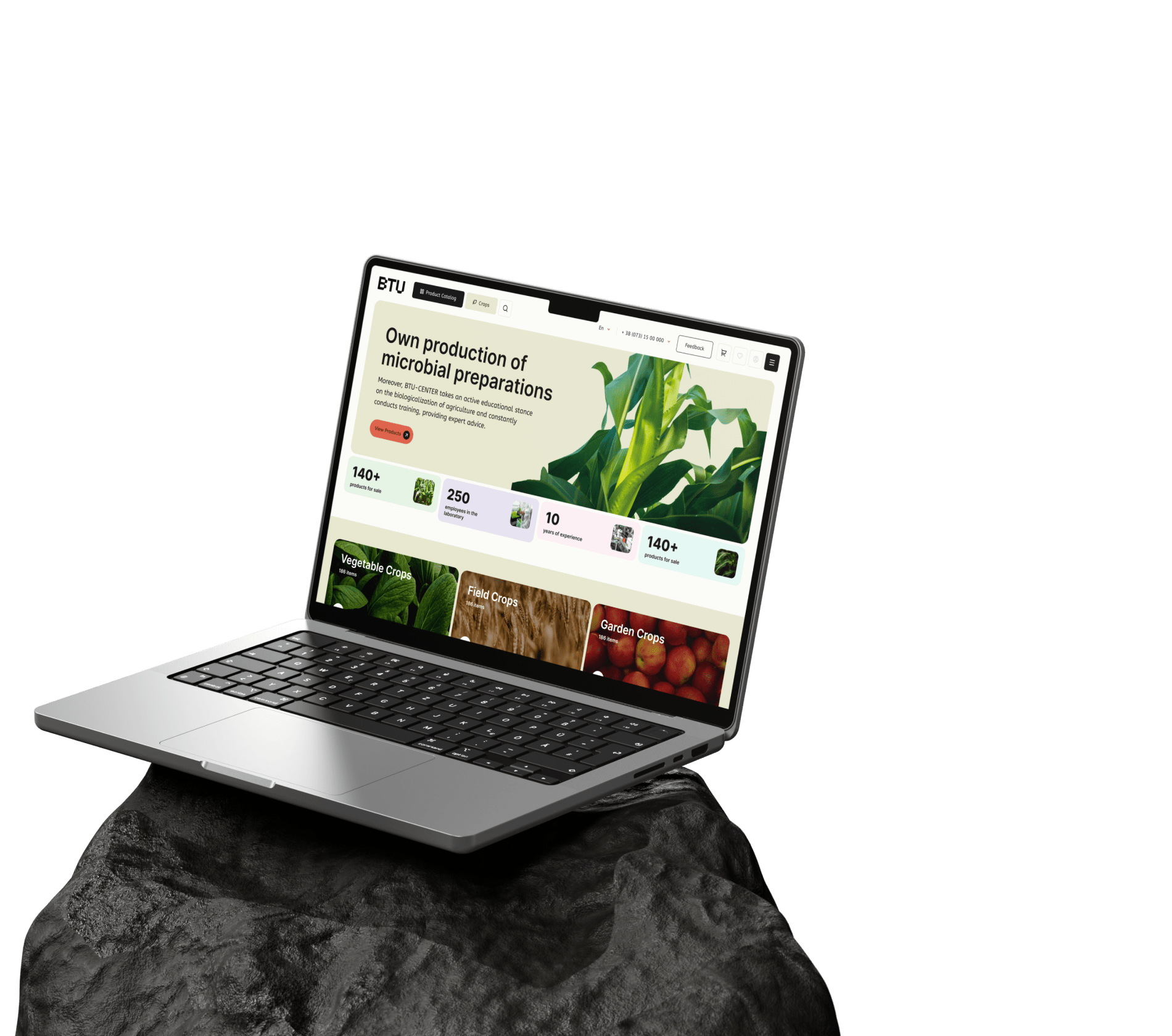
We develop online catalogue websites for businesses with carefully planned categories, filters, search, product or service pages, enquiry forms, CMS functionality, SEO-ready structure, analytics, and integrations with CRM, ERP, POS, inventory, and accounting systems. We create catalogues that present your offerings clearly, generate customer enquiries, and can later be expanded into an online store.


















Services
Solutions
for Online Catalogues
We create online catalogue websites for businesses with carefully planned categories, filters, search, product or service pages, enquiry forms, CMS functionality, SEO-ready structure, and integrations. We develop catalogues that present your offerings clearly, generate enquiries, and can scale into an online store or B2B platform.
We design an intuitive catalogue structure with categories, filters, search, product or service pages, enquiry forms, CTA buttons, and a responsive mobile experience. We help users find the right product or service quickly and submit an enquiry.

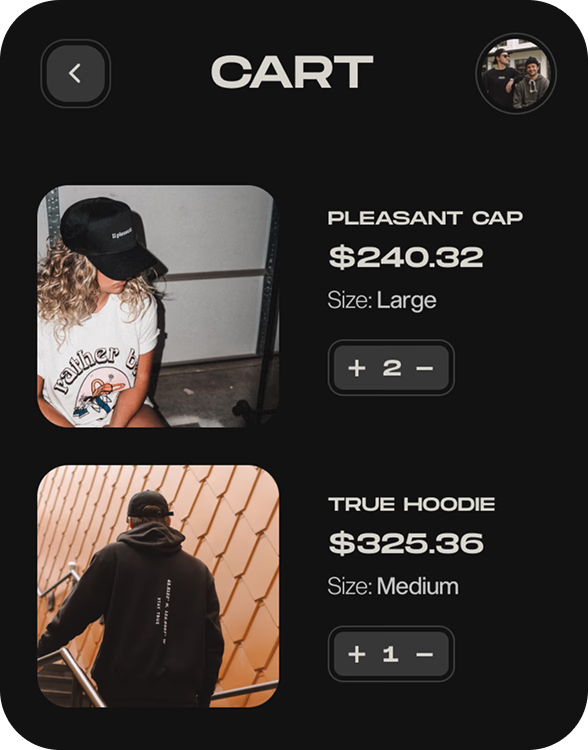
We configure a CMS for managing categories, products or services, specifications, images, documents, SEO data, and content. Depending on the project requirements, we may use WordPress, Shopify, or a custom content management system.

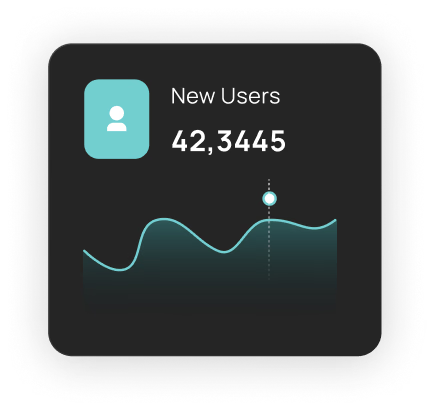
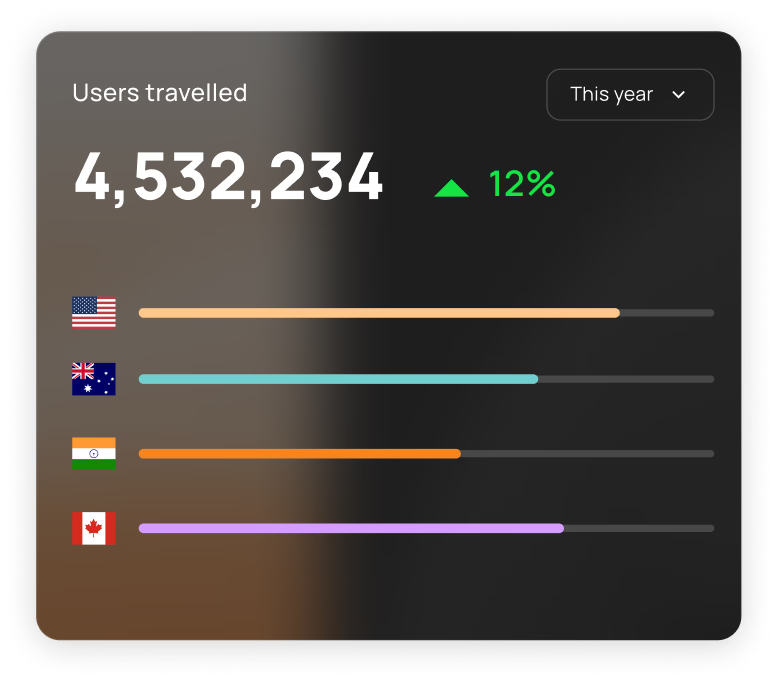

We integrate online catalogues with CRM and ERP platforms to exchange enquiries, customer information, products, statuses, lead sources, documents, and other business data. These integrations automate enquiry processing and simplify your team’s workflows.
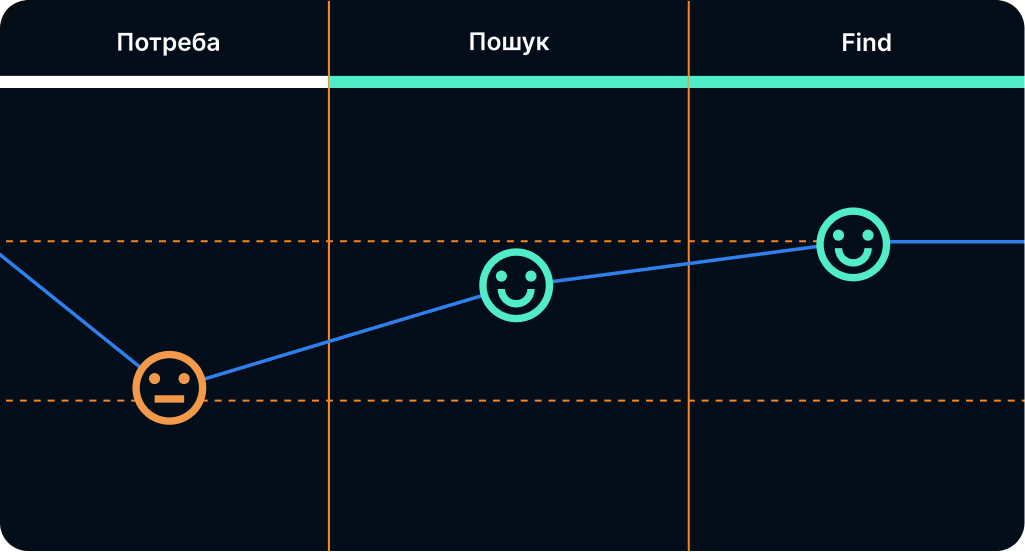
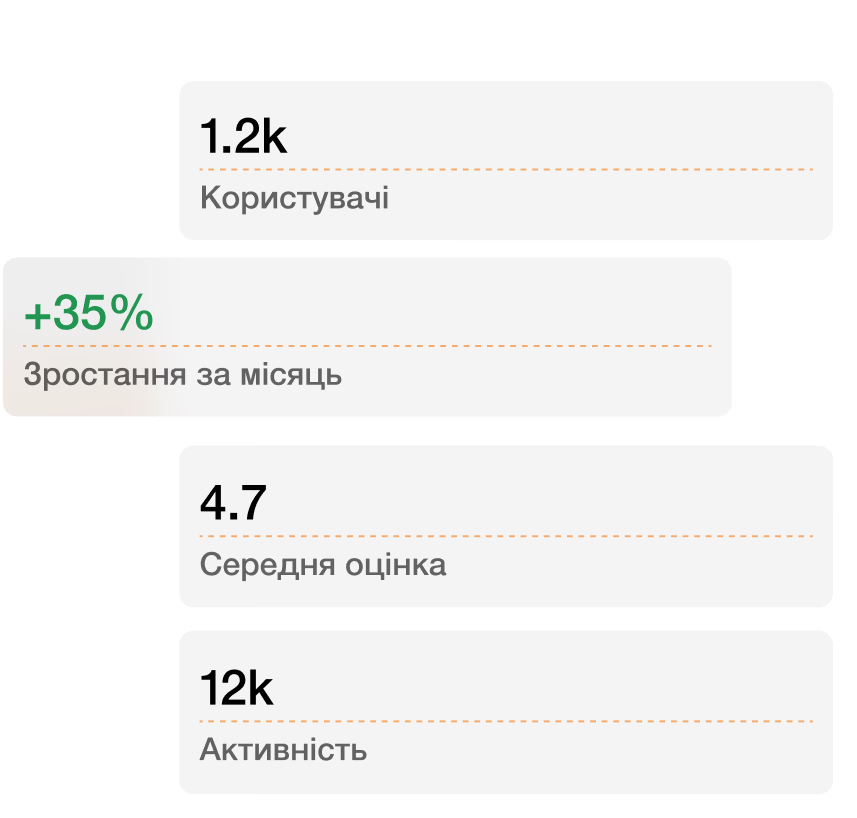
We connect online catalogues with POS, inventory, and accounting software to synchronize categories, products, prices, stock levels, specifications, documents, statuses, and other business data. This is especially useful for catalogues with extensive product ranges or B2B functionality.

Capabilities
What’s Included
in Online Catalogue Development
We design online catalogues as intuitive tools for presenting products and services—from categories, filters, and detailed listings to enquiry forms, CMS functionality, SEO-ready structures, analytics, and integrations with CRM, ERP, POS, inventory, and accounting systems.
Stages
Online Catalogue Development
Stages
We manage the project from analyzing your business, offerings, catalogue structure, and enquiry flows to UX/UI design, development, CMS configuration, integrations, testing, launch, and ongoing catalogue development.
We study your business model, products or services, target audience, competitors, catalogue structure, enquiry process, and future integrations. We determine which categories, filters, listing pages, and user journeys the online catalogue requires.
We design the catalogue structure, including categories, subcategories, filters, search, sorting, product or service pages, enquiry forms, and the user journey from exploring your offerings to submitting an enquiry.
We create the online catalogue design based on your brand, user behaviour, mobile experience, and the usability of product listings, filters, detailed pages, CTA buttons, and enquiry forms.
We develop the website’s front end and back end, configure the CMS, categories, product or service pages, filters, search, enquiry forms, SEO settings, analytics, and responsive layouts.
We add or import products, services, categories, specifications, images, documents, descriptions, and SEO data. When needed, we prepare the structure for future catalogue expansion or a transition to e-commerce.
We connect the catalogue with CRM and ERP platforms, POS, inventory and accounting software, analytics, email and SMS services, external APIs, and internal business systems. We configure the exchange of enquiries, products, statuses, prices, stock levels, and other business data.
We test responsiveness, speed, filters, search, product pages, enquiry forms, SEO settings, analytics, integrations, and CMS functionality. After launch, the catalogue can be expanded with new categories, integrations, and e-commerce features.
Portfolio
Online Catalogues
and Integrations
Explore our online catalogues, e-commerce websites, digital commerce platforms, and B2B solutions—projects where success depends not only on design and development, but also on catalogue structure, filters, product pages, enquiries, CRM/ERP, POS, inventory and accounting integrations, and future scalability.

Manufacturer of microbiological preparations for agriculture.
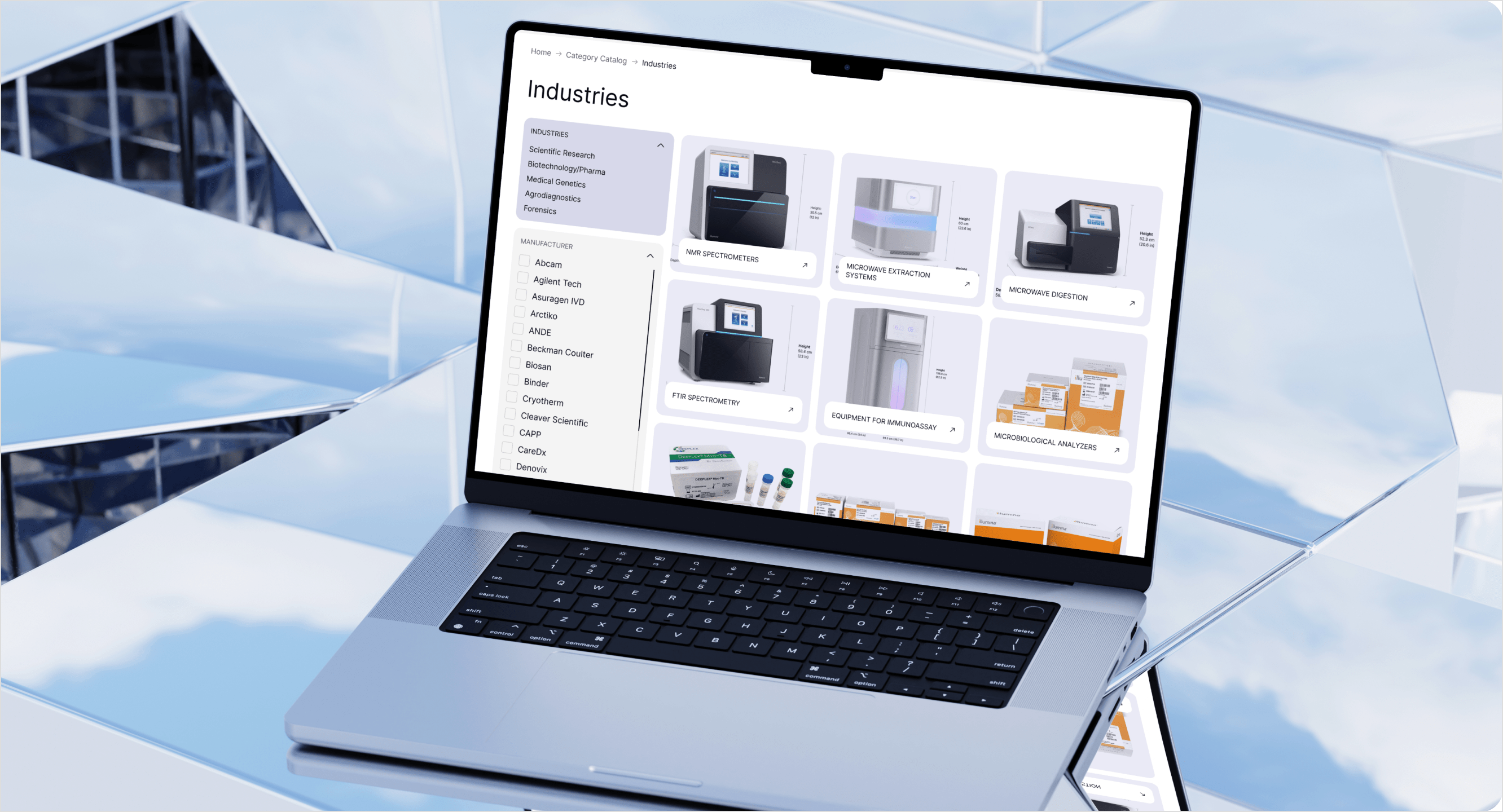
BioLabTech is a company specializing in the supply of laboratory and medical equipment, providing comprehensive solutions for research, diagnostics, and healthcare institutions.

Lagoda is a Ukrainian manufacturer of cookies and wafers.

Kyivhlib is one of the largest bakery companies in Ukraine, producing and distributing a wide range of bread, pastries, and confectionery products across the country.
Clients
Our
clients

Professional nail and beauty products brand

Premium skincare and cosmetics brand

Online platform for selling used cars

Professional makeup brand

Sports field line-marking technology company

Freight shipping and logistics service provider

Video conferencing and online meeting platform

Cybersecurity and digital protection solutions company

Car protection and detailing studio offering PPF, tinting, and vinyl wrap services

Music and entertainment production company

AI-powered mobile game monetization platform

Blockchain and Web3 technology company
Articles
Recent
articles
INCREATE
web production
agency
We craft fast functional web products of any scale. We translate your ideas into modern sites, platforms and applications.
Reviews
from our clients
All Reviews The result is a modern, scalable, and user-friendly website aligned with our business goals.

The design, animations, and excellent support made a strong impression.

INCREATE managed the project with a clear and transparent process. We really enjoyed working with their team.

FAQ
The cost of online catalogue development depends on the structure, number of categories and listings, UX/UI design complexity, CMS, filters, search, enquiry forms, SEO requirements, analytics, product imports, integrations, and future development plans.
At INCREATE, an online catalogue with a carefully planned structure, custom UX/UI design, CMS, categories, filters, product or service pages, and enquiry forms may cost approximately $5,000–$12,000.
A large catalogue with advanced filters, product imports, CRM or ERP integrations, connections to POS, inventory and accounting software, personalized B2B terms, or preparation for future e-commerce functionality may cost $12,000–$20,000 or more. We provide an accurate estimate after analyzing the product range, catalogue structure, required functionality, and technical specifications.
Full-cycle online catalogue development may include analyzing the business, product or service range, target audience, competitors, enquiry process, and future integrations. Based on this research, we plan the catalogue structure, categories, subcategories, filters, product or service pages, user journeys, and technical functionality.
The project may include UX prototyping, UX/UI design, responsive front-end development, back-end development, CMS configuration, catalogue functionality, filters, search, listing pages, enquiry forms, SEO-ready structure, analytics, CRM/ERP, POS, inventory and accounting integrations, testing, launch, and post-release technical support.
The main purpose of an online catalogue is not simply to display a list of products or services. It should help users quickly find the right option, understand its specifications, submit an enquiry, or request a consultation from a manager.
An online catalogue presents a company’s products, services, equipment, or other offerings without requiring customers to complete purchases through a shopping cart and checkout. It usually includes categories, filters, search, product or service pages, specifications, images, documents, enquiry forms, and options to contact a manager.
An online store includes complete e-commerce functionality, such as a shopping cart, checkout, online payments, delivery, order statuses, customer accounts, promotional codes, inventory data, and integrations with payment and logistics providers. An online store is designed for direct online sales, while an online catalogue primarily presents the company’s offerings and generates enquiries.
For many B2B companies, manufacturers, distributors, and businesses with complex products, an online catalogue is an effective first stage. It can be launched faster without unnecessary e-commerce functionality and expanded into a complete online store when the business is ready.
Yes. An online catalogue can be planned and developed so it can later be expanded into a complete e-commerce website. To support this transition, it is important to consider the category structure, product pages, CMS, product database, filters, SEO pages, integrations, and technical architecture from the beginning.
During the first stage, the website can operate as a catalogue with enquiry forms and buttons such as “Request a Consultation,” “Request Pricing,” or “Send an Enquiry.” Shopping cart functionality, checkout, online payments, delivery, customer accounts, order statuses, CRM and ERP integrations, and connections to POS, inventory and accounting systems can be added later.
This approach is suitable for businesses that are not yet ready to launch complete e-commerce functionality but want to present their products online, generate enquiries, validate demand, and develop their digital platform gradually.
Yes. An online catalogue can include filters, search, sorting, categories, subcategories, specifications, tags, product badges, and other navigation tools. These features are especially important for catalogues containing many products, services, models, SKUs, equipment types, or technical specifications.
Filters can use parameters such as category, brand, application, size, material, price, specifications, availability, industry, technical requirements, and other criteria that matter to users.
During the planning stage, we analyze how customers search for products or services, which parameters influence their decisions, and which filters they actually need. This makes the catalogue easier to use without introducing unnecessary complexity.
An online catalogue can be developed on WordPress, OpenCart, Laravel, or another platform depending on the business requirements, number of products, filter complexity, integrations, SEO requirements, and future development plans. The CMS or technology should be selected after analyzing the catalogue structure and expected functionality.
WordPress may be suitable for corporate catalogues, service directories, product catalogues, and medium-sized product databases where flexible content management, SEO functionality, and an intuitive CMS are important. OpenCart may be appropriate when the catalogue is expected to become an online store in the future.
For projects requiring complex functionality, advanced filters, a large product database, B2B portals, CRM/ERP, POS, inventory and accounting integrations, or custom architecture, Laravel or another framework may be a better choice. INCREATE selects the technology based on the project requirements—not the other way around.
Yes. An online catalogue can integrate with CRM and ERP platforms, POS, inventory and accounting software, internal business systems, external APIs, enquiry forms, email and SMS services, analytics platforms, and marketing tools. These integrations automate data exchange between the website and the company’s business systems.
For example, catalogue enquiries can be transferred automatically to a CRM. Managers can see the enquiry source, selected category, product or service, customer contact details, and current processing status.
Product catalogues can also import products, categories, prices, stock levels, specifications, and documents from ERP, inventory, or accounting software. Before development begins, it is important to determine which data will be exchanged, in which direction, how frequently it will be synchronized, and which system will serve as the primary source of information.
Yes. Products or services can be imported automatically when the client has a prepared data source, such as an ERP, CRM, inventory or accounting platform, XML feed, CSV file, Excel spreadsheet, API, or another business system. This is especially useful for large catalogues where manually adding and updating every listing would be inefficient.
Automatic imports may include product names, categories, specifications, descriptions, images, documents, prices, stock levels, availability statuses, and other parameters. The import scope depends on the quality of the source data and the rules the website must use to process it.
Before implementation, the data structure should be reviewed for duplicates, incomplete specifications, category organization, unique SKUs, images, documents, and update rules. This helps maintain a structured and reliable catalogue after launch.
Yes. The SEO structure should be planned before designing and developing an online catalogue. A catalogue can have significant organic search potential when its categories, subcategories, URLs, metadata, headings, product or service pages, landing pages, and internal links are structured correctly.
It is important to determine which categories should be indexed, which filter combinations can create useful landing pages, which pages should be excluded from indexing, how URLs should be structured, and how duplicate content will be prevented.
If the SEO strategy is not considered from the beginning, the catalogue structure, URLs, filter pages, or content may require significant changes after launch. For this reason, SEO should be included before design and development rather than added after release.
The timeline depends on the catalogue structure, number of pages, categories, product or service listings, UX/UI design complexity, filters, search functionality, CMS, integrations, product imports, and content readiness.
A medium-complexity online catalogue may take approximately two to four months when the project includes structure planning, UX/UI design, CMS configuration, catalogue functionality, filters, listing pages, enquiry forms, SEO setup, and foundational analytics.
Projects involving a large catalogue, advanced filters, automated product imports, CRM/ERP, POS, inventory and accounting integrations, B2B functionality, or preparation for future e-commerce may require more time. We create an accurate project plan and timeline after analyzing the requirements, product range, and technical specifications.
DEVELOPING WITH INCREATE?
Click for a free consultation. Fill out the form to build an effective partnership and long-term cooperation with INCREATE
 Max KonovalenkoCEO
 Anton ChumakDigital Expert
 Sasha TymoshenkoProject Manager
 Anna OsedachUI/UX Designer
 Roman ShtaierUI/UX Designer
Full-Cycle Online Catalogue Development for Businesses
When Does a Business Need an Online Catalogue?
Online catalogue development is suitable for businesses that want to present products or services online but do not necessarily require a complete e-commerce website with a shopping cart, online payments, and automated checkout. An online catalogue organizes the company’s offerings, presents categories, specifications, images, advantages, and terms of service, and generates enquiries from prospective customers.
Custom online catalogue development is especially relevant for manufacturers, distributors, B2B companies, suppliers, furniture brands, agricultural companies, industrial enterprises, service providers, and businesses that need to present a large volume of products or services. This format is appropriate when a purchase requires a consultation, custom pricing, configuration, availability confirmation, or personalized terms.
What Is an Online Catalogue?
An online catalogue is a website that allows a company to present its products, services, business areas, or other offerings in a structured and convenient format. Its primary purpose is to help users quickly find the right category, review a product or service page, explore specifications, images, descriptions, and documents, and submit a request for a consultation or estimate.
Unlike a standard corporate website, an online catalogue has a more comprehensive product or service structure. It may include categories, subcategories, filters, search, detailed listings, enquiry forms, SEO landing pages, a CMS for content management, and a scalable architecture. It can operate as a standalone sales tool or as the first stage before launching a complete online store.
How Is an Online Catalogue Different from an Online Store?
Online catalogues and e-commerce websites have similar structures, including categories, product pages, filters, search, and detailed descriptions. The main difference is that an online catalogue does not necessarily include a shopping cart, online payment, or automated checkout. Instead, users can submit an enquiry, request pricing, book a consultation, or contact a manager.
An online catalogue works well when prices depend on configuration, order volume, product specifications, B2B terms, delivery, availability, or a custom estimate. If the business requires a complete online sales process with a shopping cart, payment, delivery, customer portal, and checkout, consider online store development.
Online Catalogue Formats for Businesses
INCREATE develops product catalogues, service directories, manufacturer catalogues, B2B catalogues, distributor websites, and catalogues for furniture, equipment, construction materials, agricultural products, industrial solutions, medical products, cosmetics, and other industries.
Each catalogue is designed around the business’s specific requirements. One project may need to present an extensive product range clearly, another may require advanced filters, a third may need CRM/ERP, POS, inventory and accounting integrations, while another may need an architecture that supports a future transition to e-commerce.
Catalogue Structure, Filters, Search, and Product Pages
The catalogue is the central component of this type of website. Its structure determines how quickly users can find the product or service they need. Categories, subcategories, filters, sorting, search, specifications, badges, availability, documents, images, descriptions, and the path to an enquiry must all be planned carefully.
A product or service page should answer the user’s main questions: what the offering is, its specifications, benefits, available options, ordering terms, documents, certifications, warranties, and the next step. More advanced catalogues can also include comparisons, saved items, pricing requests, consultation forms, downloadable files, and personalized terms for different customer groups.
Online Catalogue UX/UI Design
An effective catalogue does more than display a list of products or services. It creates a clear journey from the user’s first visit to an enquiry. During the UX/UI design stage, we plan the category structure, filters, search, listing pages, enquiry forms, mobile experience, CTA buttons, and key user journeys.
Well-designed UX helps users find the right option faster, understand its specifications, compare alternatives, and submit an enquiry. UI design shapes the visual perception of the brand, the presentation of its products or services, and the overall level of trust in the company.
CMS for Online Catalogue Management
A catalogue should allow the company’s team to manage content independently by adding products or services, editing categories, updating images and specifications, publishing documents, creating pages, and changing SEO data. Depending on the project requirements, the catalogue can be developed using WordPress, OpenCart, or a custom content management system.
WordPress can be suitable for catalogues that require flexible content, an SEO-ready structure, a blog, and convenient page management. OpenCart may be appropriate when the project is closer to e-commerce and may later become a complete online store. The platform should be selected based on the number of listings, catalogue structure, filters, integrations, SEO requirements, and development plans.
CRM, ERP, POS, Inventory and Accounting Integrations
An online catalogue can become part of the company’s broader digital ecosystem. It can integrate with CRM and ERP platforms, POS, inventory and accounting software, internal databases, email and SMS services, analytics tools, advertising platforms, external APIs, and product management systems.
For example, catalogue enquiries can be transferred automatically to a CRM, allowing managers to see the product page, lead source, customer contact information, and current enquiry status. CRM/ERP integrations and POS, inventory and accounting integrations can synchronize products, categories, prices, stock levels, documents, statuses, customer data, and other business information.
SEO Structure for an Online Catalogue
SEO should be considered from the initial planning stage. Categories, subcategories, URLs, headings, metadata, product or service pages, internal links, filters, landing pages, and the technical indexing foundation must all be structured correctly.
An online catalogue can have significant organic search potential when category pages, product groups, informational sections, blog content, descriptive copy, structured data, and analytics are planned properly. If the SEO strategy is not established from the beginning, the catalogue structure, URLs, or filter pages may require substantial changes after launch.
Online Catalogue, Corporate Website, or Web Application?
An online catalogue is suitable when a business needs to present its products or services and generate enquiries. If the primary objective is to present the company, its expertise, services, case studies, and brand, consider a corporate website. If the project requires complex functionality, user portals, multiple roles, dashboards, or process automation, custom web application development may be a better option.
During the analysis stage, INCREATE helps determine which format is most suitable: an online catalogue, corporate website, service website, online store, B2B portal, or custom web platform. This prevents unnecessary functionality while establishing a foundation for future scalability.
How Much Does Online Catalogue Development Cost?
The cost depends on the structure, number of categories and listings, UX/UI design complexity, CMS, filters, search, enquiry forms, SEO requirements, analytics, integrations, product imports, and future development plans.
At INCREATE, an online catalogue with a carefully planned structure, custom UX/UI design, CMS, categories, filters, product or service pages, and enquiry forms may cost approximately $5,000–$12,000. A larger catalogue with advanced filters, product imports, CRM/ERP, POS, inventory or accounting integrations, personalized B2B terms, or preparation for future e-commerce functionality may cost $12,000–$20,000 or more.
Online Catalogue Development Stages
Online catalogue development begins with an analysis of the business, product or service range, categories, target audience, competitors, enquiry process, future integrations, and SEO requirements. We then plan the catalogue structure, create the UX prototype and UI design, define the technical functionality, configure the CMS, design product or service pages and enquiry forms, and prepare the implementation plan.
After development, we test the responsive layouts, speed, categories, filters, search, listing pages, enquiry forms, notifications, SEO settings, analytics, integrations, and CMS. Following launch, the catalogue can be expanded with new categories, products, SEO landing pages, language versions, integrations, and e-commerce functionality.
Why Choose INCREATE for Online Catalogue Development?
INCREATE develops online catalogues for businesses that need more than a basic list of products or services. We create carefully planned digital tools for presenting offerings, generating enquiries, and supporting future growth. Our approach combines UX/UI design, front-end and back-end development, CMS configuration, SEO-ready structure, analytics, CRM/ERP, POS, inventory and accounting integrations, and post-launch technical support.
Our team views an online catalogue as part of the company’s broader business ecosystem. During development, we consider the structure of the offerings, user journeys, sales workflows, enquiry forms, SEO strategy, integration requirements, loading speed, mobile experience, and the potential to scale the catalogue into an online store or custom web application.
Something went wrong. Please try submitting the form again.