
E-commerce
Website Development
Turnkey e-commerce development for businesses: UX/UI design, product catalogues, advanced filtering, shopping carts, checkout, payment processing, shipping, CRM, and integrations with popular accounting and ERP platforms such as QuickBooks Online, Xero, NetSuite, and Microsoft Dynamics 365 via API. We build scalable e-commerce solutions designed to grow with your business.


















Services
Solutions
for E-commerce
We enhance online stores with integrations, B2B functionality, marketplace capabilities, and internal business systems. We help you build more than a website with a product catalogue—we create a complete e-commerce platform for sales, operations, and scalable growth.
We integrate online stores with CRM and ERP systems, synchronizing leads, customers, orders, statuses, payments, staff tasks, and business data. This helps automate sales workflows and streamline order processing.

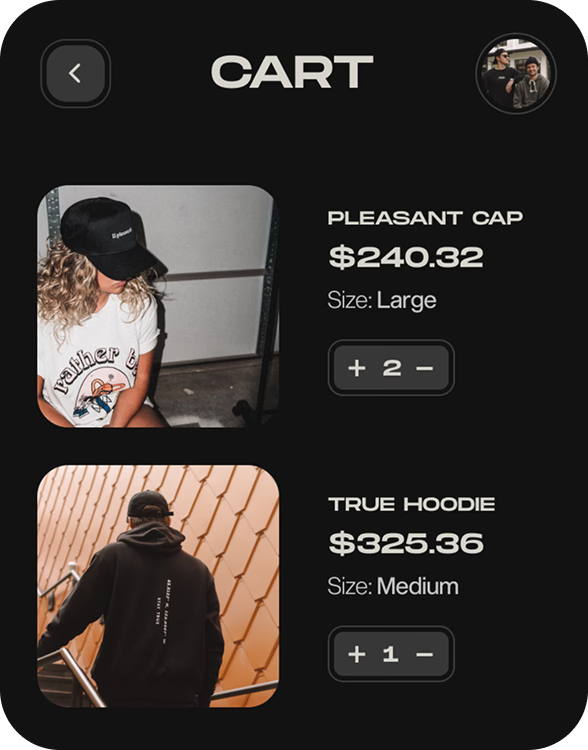
We connect online stores with POS, inventory, and accounting software to synchronize products, categories, pricing, stock levels, orders, customers, payments, documents, and statuses.
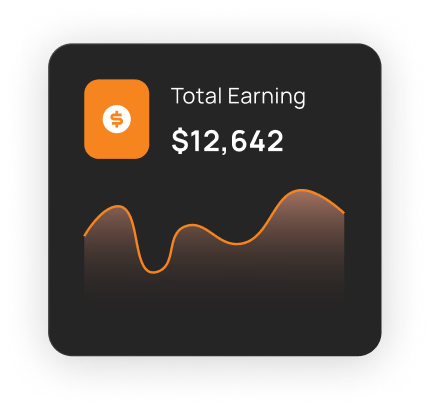
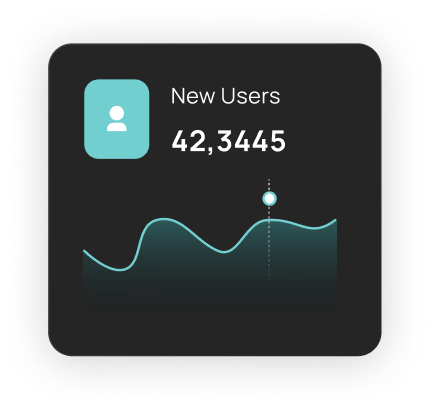
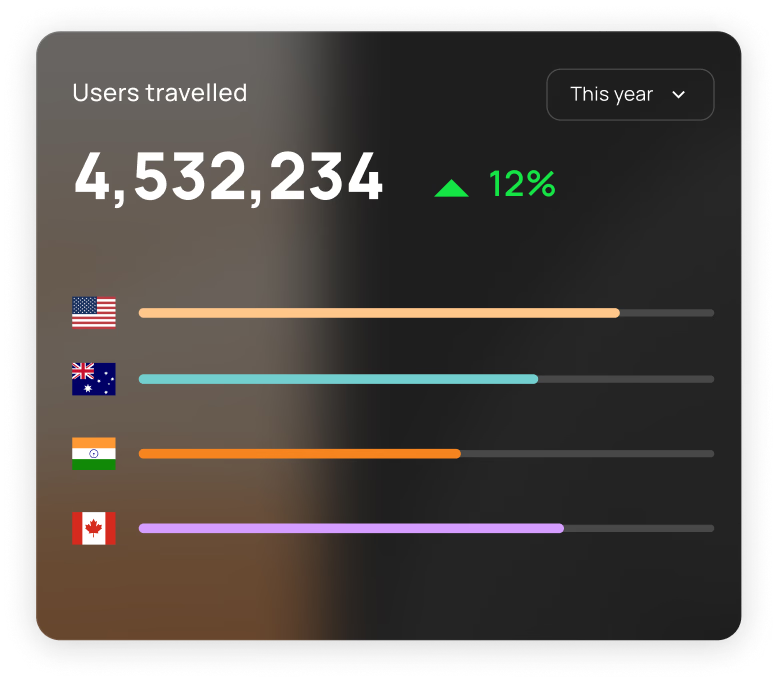

We design and develop marketplaces and e-commerce platforms with seller portals, product catalogues, order management, etc.
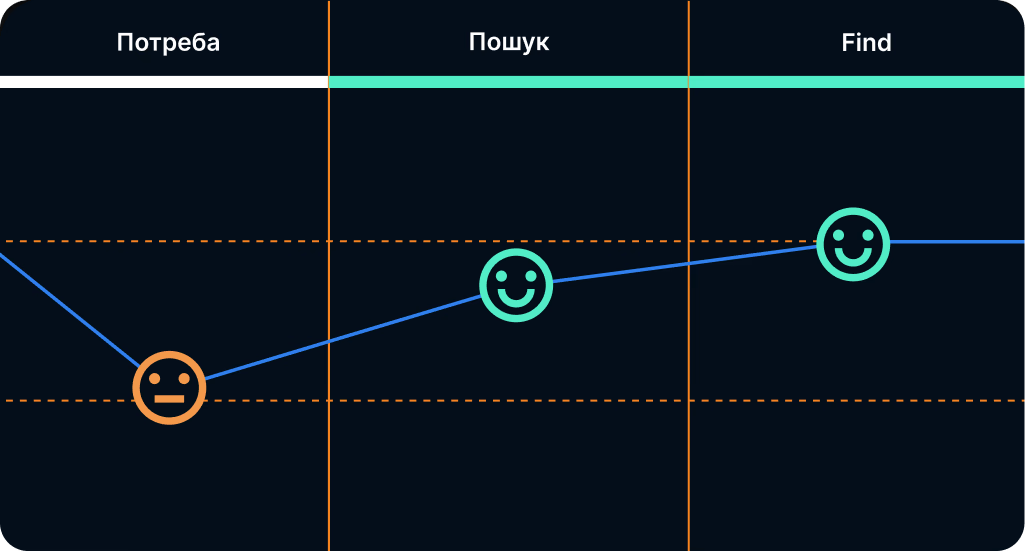
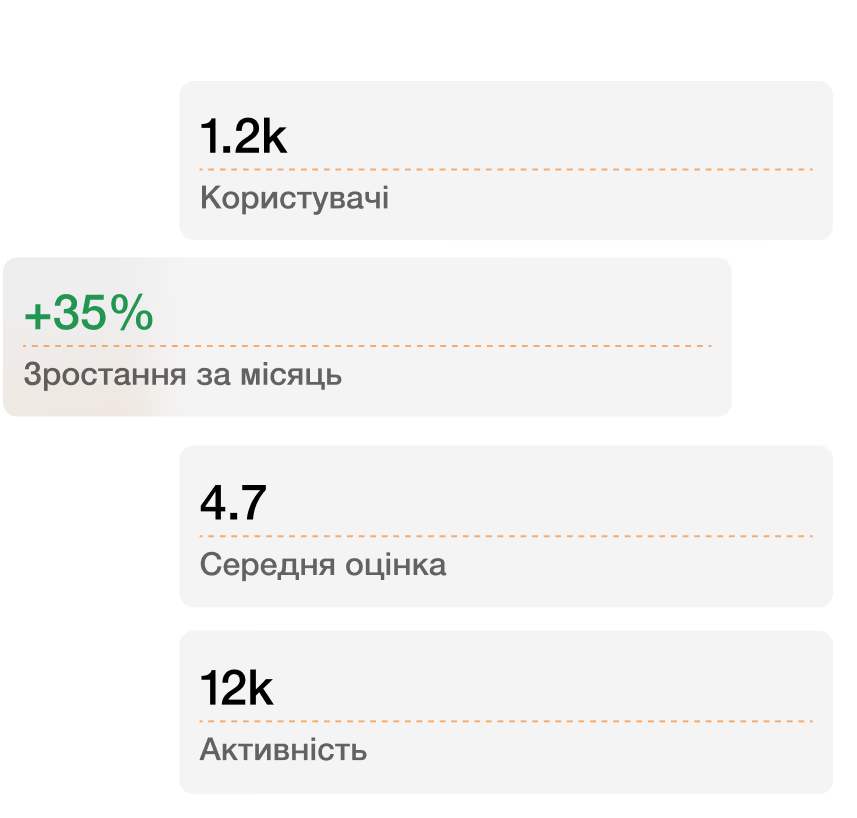
We create B2B portals for wholesale customers, dealers, and partners, featuring custom pricing, order history, documents, payment statuses, repeat ordering, and CRM/ERP integrations.

Capabilities
What’s Included
in E-commerce Website Development
We design an online store as a complete e-commerce system—from catalogue architecture, filters, and product pages to the shopping cart, checkout, payments, shipping, CRM/ERP, POS, inventory and accounting software integrations, SEO structure, and analytics.
Stages
Development Stages
for an E-commerce Website
We manage the entire project—from analyzing business requirements, catalogue structure, and customer journeys to UX/UI design, development, integrations, testing, launch, and ongoing e-commerce website support.
We analyze your business model, product range, target audience, competitors, sales channels, and future integrations. We define the online store’s objectives, catalogue structure, and key customer journeys.
We plan the structure of the online store, including the homepage, product catalogue, categories, filters, product pages, shopping cart, checkout, customer account, shipping and payment pages, and informational sections.
We create the visual design of the online store based on your brand, user behaviour, mobile experience, and conversion journeys. We prepare designs for key pages, interface states, and interactions.
We develop the frontend and backend of the online store, configure a CMS or custom admin panel, and implement the product catalogue, filters, search, shopping cart, checkout, product pages, and core business logic.
We connect payment gateways, shipping services, CRM, ERP, POS, inventory and accounting software, analytics, email and SMS notifications, marketing tools, and other systems required to automate sales and order processing.
We test the online store across different devices and customer journeys, including the catalogue, filters, product pages, shopping cart, checkout, payments, shipping, forms, integrations, performance, and responsive display.
We prepare the online store for release, deploy it to the primary domain, and verify its technical settings, analytics, and search engine indexing. After launch, we can maintain the website and add new features, pages, and integrations.
Portfolio
Projects
in E-commerce and Integrations
Explore our online stores, e-commerce platforms, product catalogues, and B2B solutions—projects where success depends not only on design and development, but also on catalogue architecture, shopping cart and checkout flows, payments, shipping, CRM/ERP, POS, inventory and accounting integrations, and future scalability.

BDR is a company operating in the B2B distribution of auto parts and components for commercial vehicles in the Ukrainian market. Its primary focus is the supply of parts for the repair and maintenance of trucks, trailers, and semi-trailers.
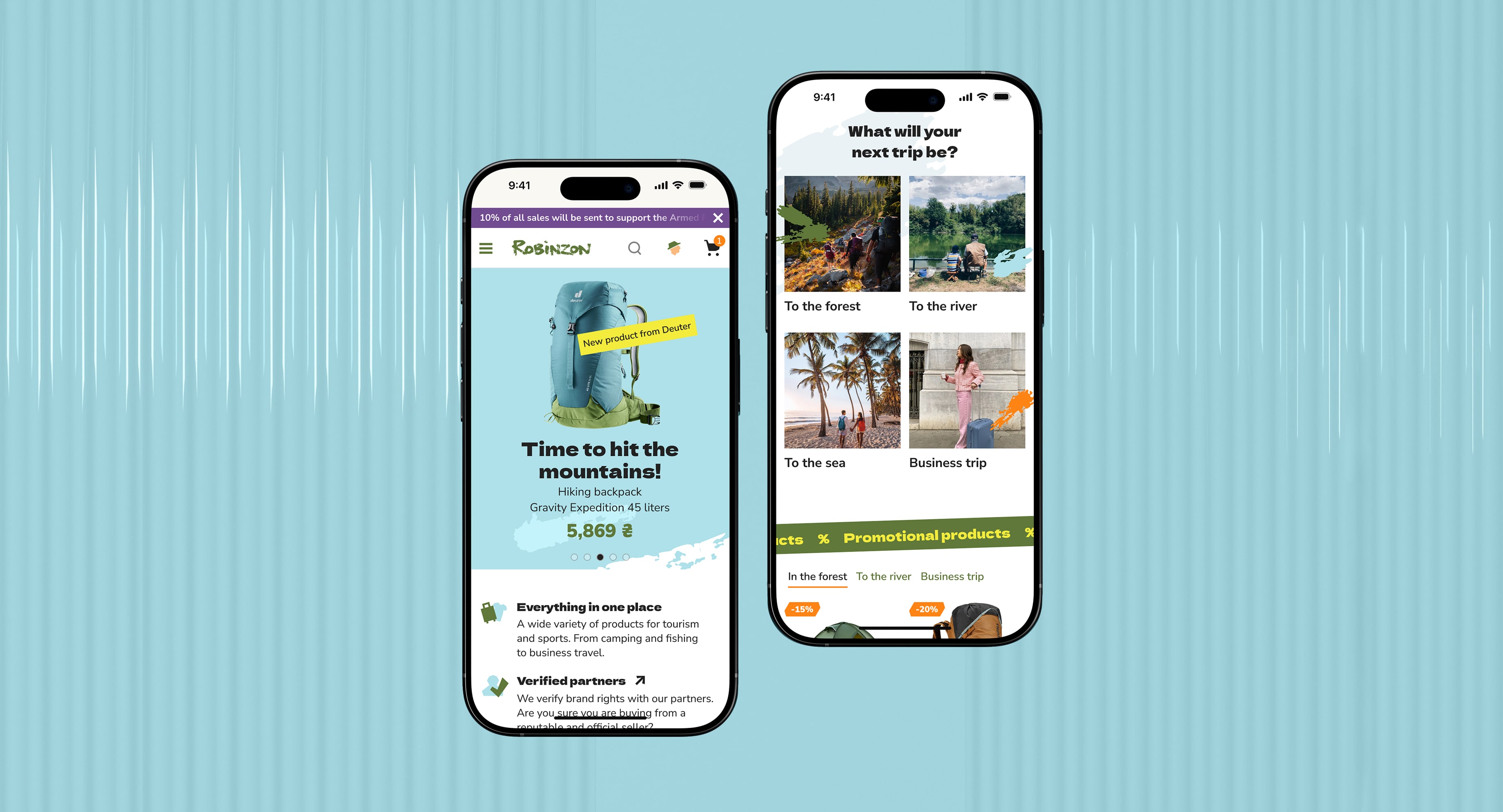
The largest Ukrainian online store specializing in selling goods for tourism.
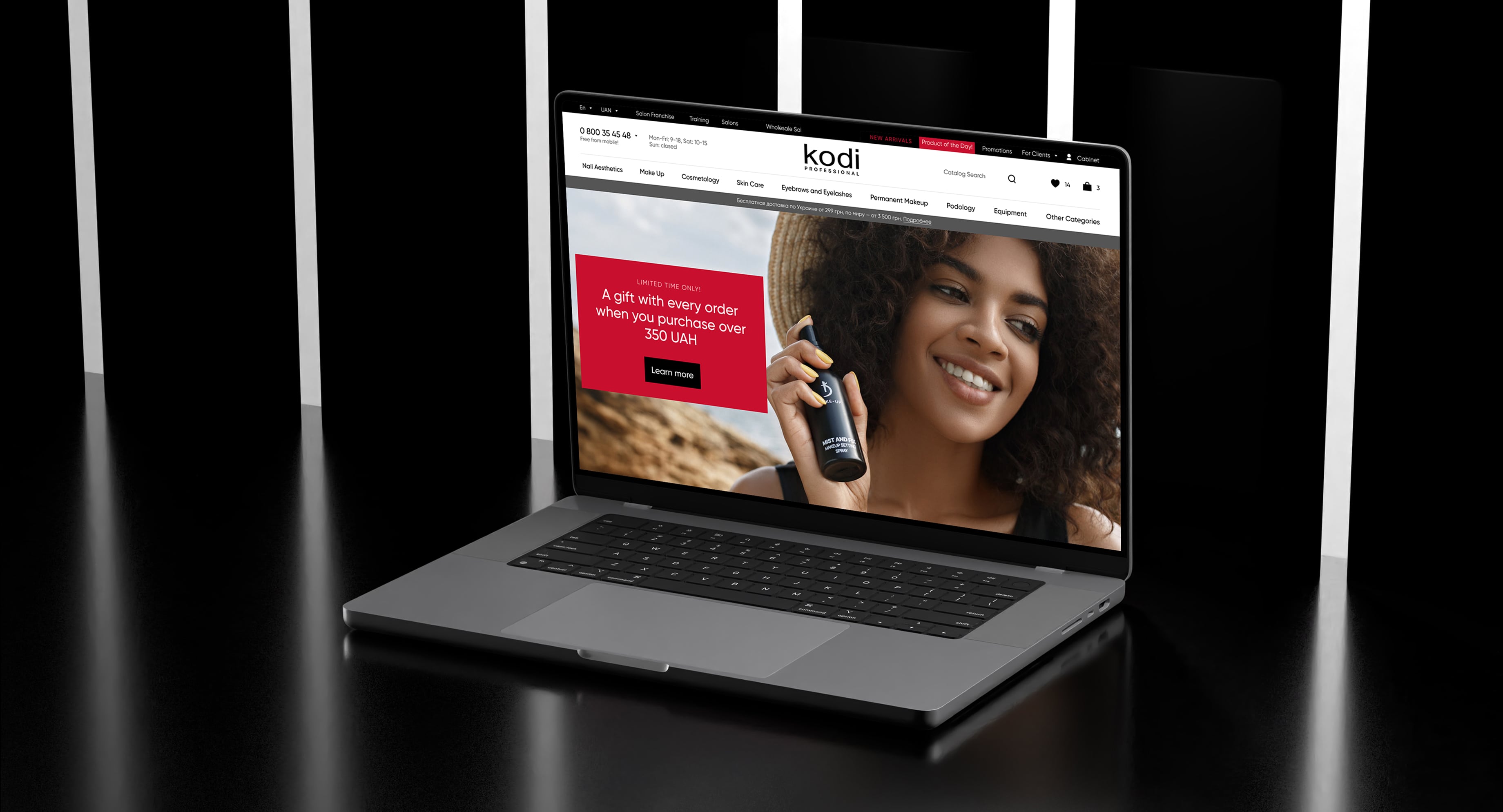
A well-known professional cosmetics brand represented in over 30 countries worldwide.
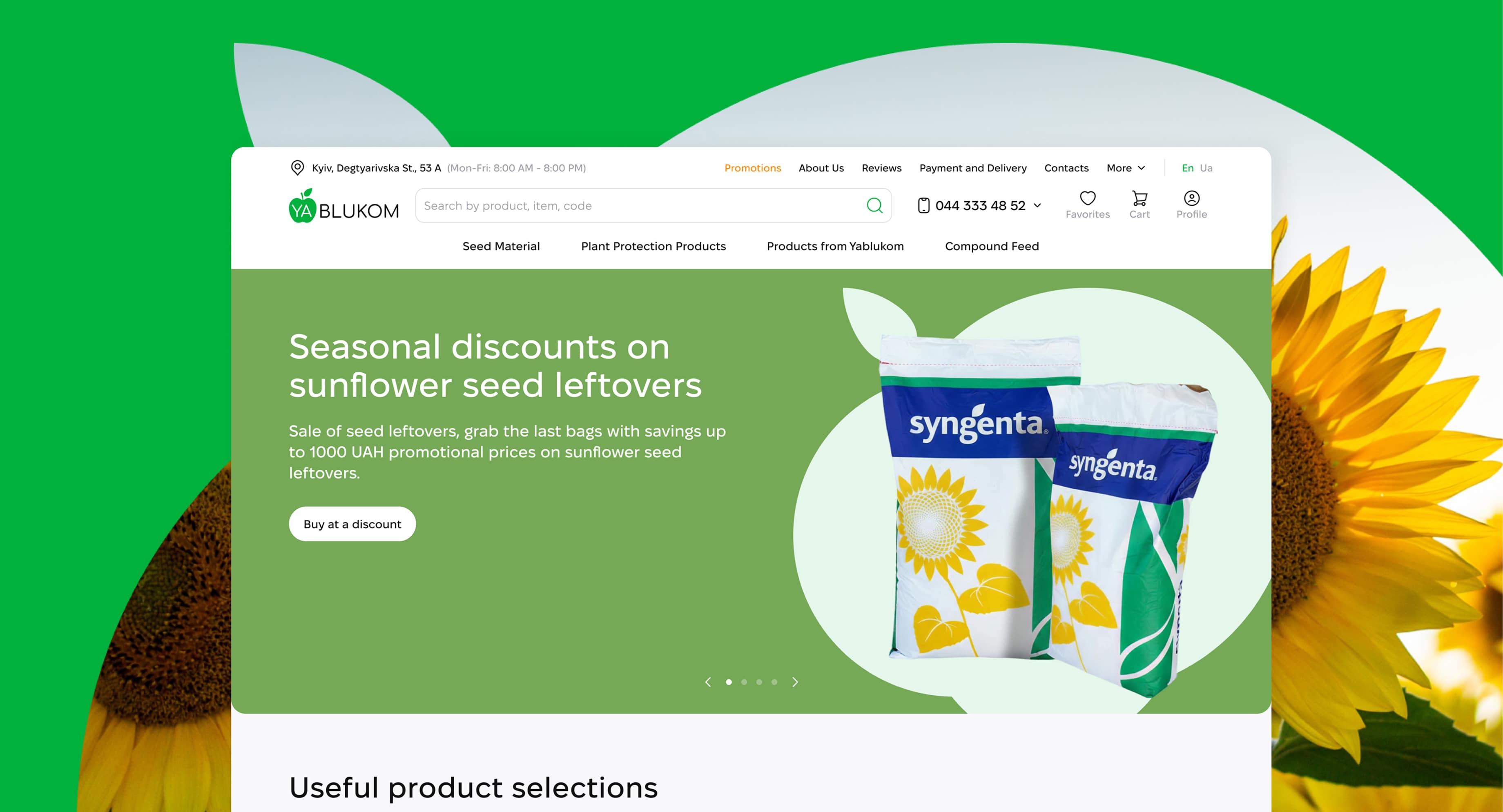
Online store specializing in the sale of seeds, plant protection products.

Manufacturer of microbiological preparations for agriculture.
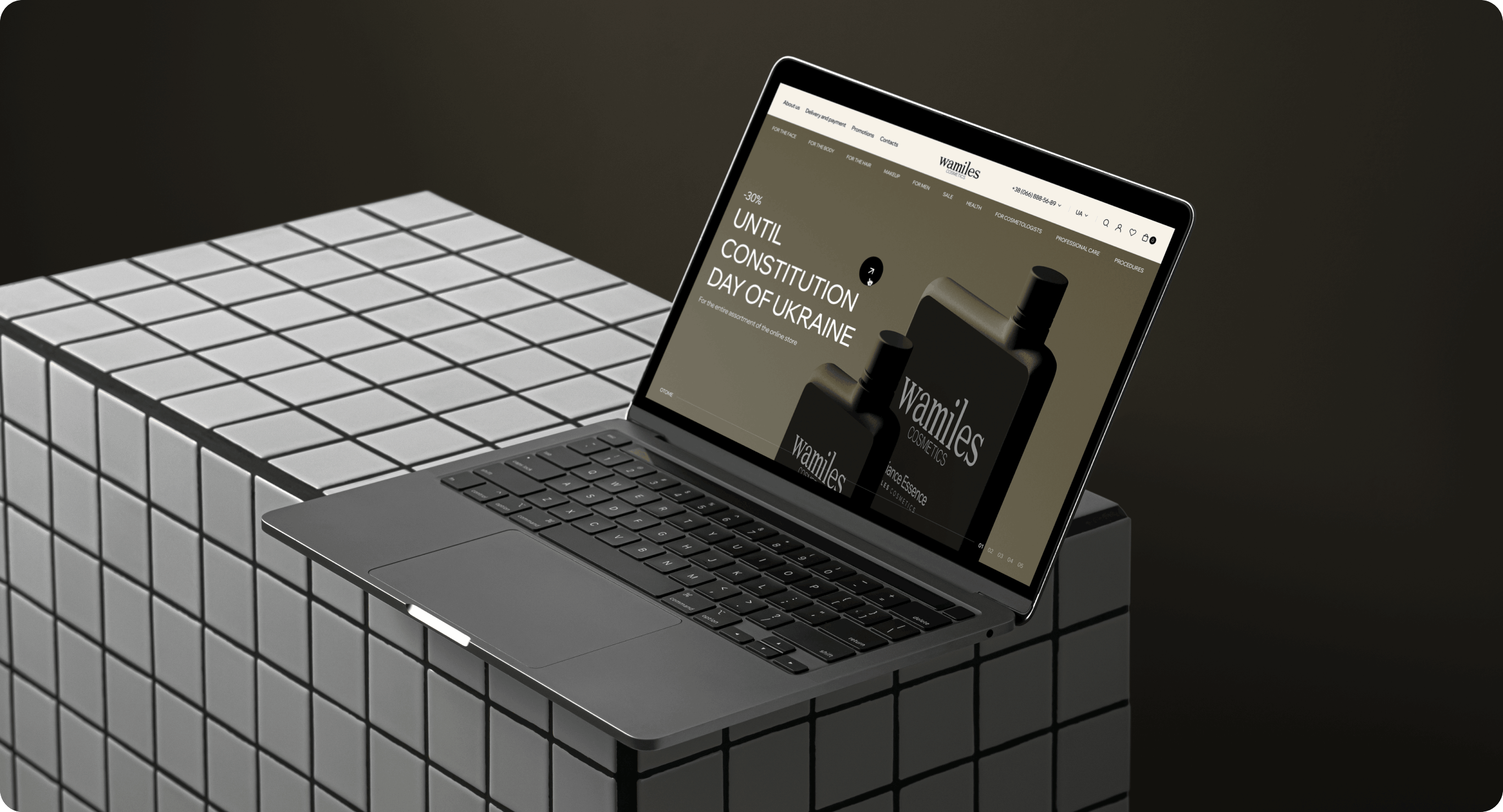
A leading Japanese professional cosmetics brand and the official makeup artist of Tokyo Fashion Week.

KRASOTA shop was founded by two sisters who are genuinely passionate about professional cosmetics, self-care, and their customers.
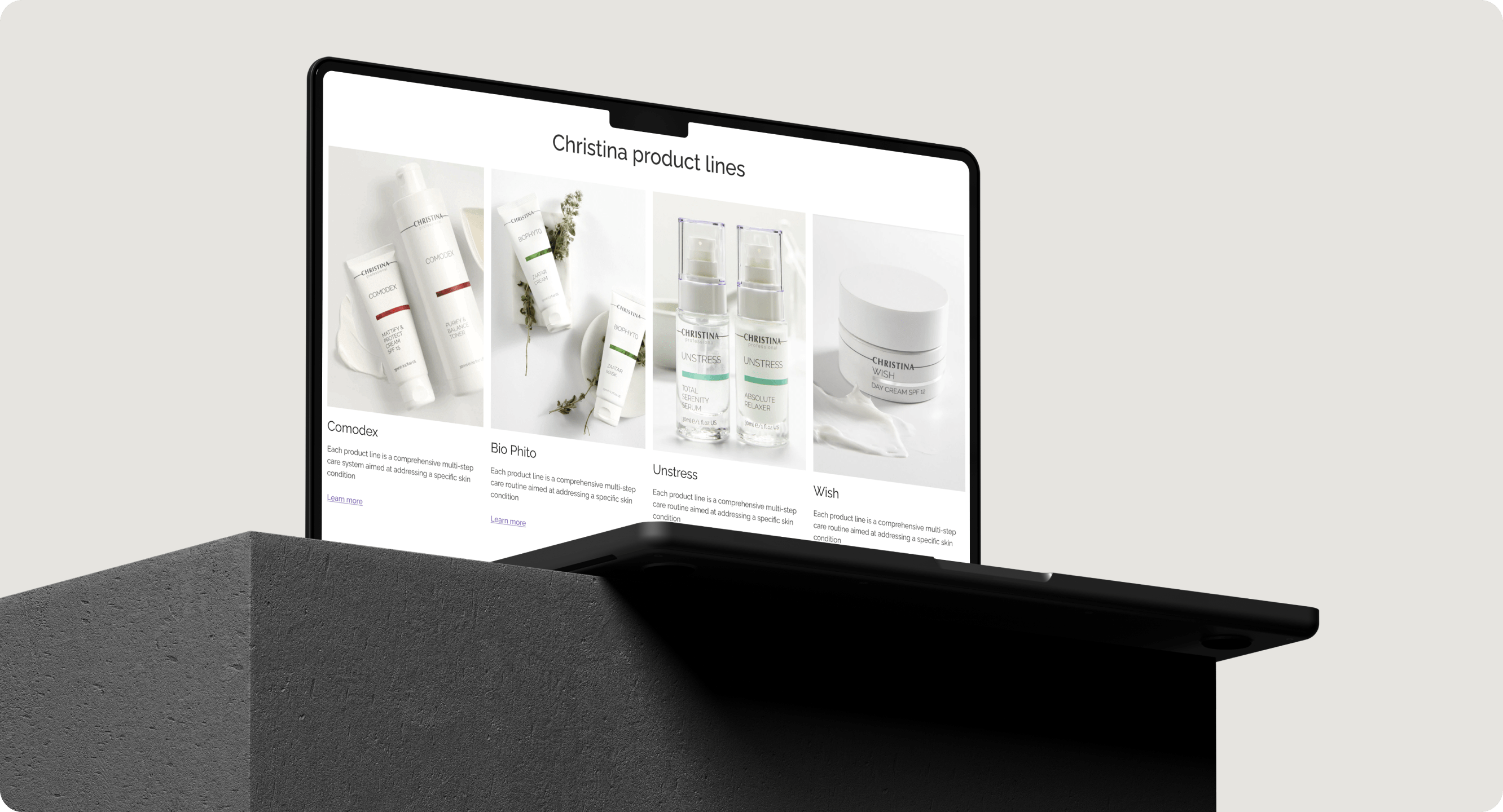
CHRISTINA is a global professional cosmetics brand founded in Israel in 1982.
Clients
Our
clients

Professional nail and beauty products brand

Premium skincare and cosmetics brand

Online platform for selling used cars

Professional makeup brand

Sports field line-marking technology company

Freight shipping and logistics service provider

Video conferencing and online meeting platform

Cybersecurity and digital protection solutions company

Car protection and detailing studio offering PPF, tinting, and vinyl wrap services

Music and entertainment production company

AI-powered mobile game monetization platform

Blockchain and Web3 technology company
INCREATE
web production
agency
We craft fast functional web products of any scale. We translate your ideas into modern sites, platforms and applications.
Reviews
from our clients
All Reviews The result is a modern, scalable, and user-friendly website aligned with our business goals.

The design, animations, and excellent support made a strong impression.

INCREATE managed the project with a clear and transparent process. We really enjoyed working with their team.

Frequently Asked Questions
The cost of e-commerce website development depends on the project type, platform, design, number of pages, catalogue complexity, filters, shopping cart, checkout, and integrations with payment gateways, shipping providers, CRM, ERP, POS, inventory, or accounting software.
At INCREATE, e-commerce website development typically ranges from $7,000 to $15,000 for projects built on Shopify, WooCommerce, OpenCart, or similar platforms. The final cost depends on the website structure, design, product catalogue, integrations, and business logic. Custom online stores, complex e-commerce platforms, B2B portals, and projects with non-standard functionality may start at $20,000.
We provide an accurate estimate after analyzing the project requirements, catalogue structure, integrations, customer journeys, and technical specifications.
Online stores are commonly built with WooCommerce, Shopify, OpenCart, Magento, or custom frameworks such as Laravel and Symfony. The right platform depends on your business requirements, budget, number of products, required integrations, and future growth plans.
WooCommerce is well suited to flexible WordPress-based stores where content, SEO, and customization are important. Shopify is often selected for a faster e-commerce launch with managed infrastructure. OpenCart can be a practical option for a conventional product-based store. Magento and custom Laravel development are better suited to complex e-commerce systems, B2B portals, marketplaces, and projects with non-standard business logic.
INCREATE helps select the appropriate technology after analyzing your business model, catalogue, integrations, expected traffic, and long-term scaling requirements.
Full-service e-commerce website development can include business requirements analysis, UX prototyping, UI design, responsive front-end development, back-end development, CMS or administration panel configuration, product catalogue development, filters, search, product pages, shopping cart, checkout, shipping and payment pages, integrations, and pre-launch testing.
The project may also include integrations with CRM, ERP, POS, inventory and accounting software, payment gateways, shipping providers, analytics tools, marketing services, and marketplaces. The final scope depends on your business model, product range, sales workflows, and future plans for the store.
The timeline depends on the project scope, number of unique pages, design complexity, product catalogue, filters, integrations, and business logic. A smaller store built on an established platform can be launched faster, while a custom e-commerce project with UX/UI design, customer accounts, CRM/ERP integrations, and a complex catalogue structure requires more time.
A full e-commerce development project usually includes discovery, prototyping, design, development, integrations, testing, and launch. After an initial brief or discovery phase, we can provide a more accurate timeline for your project.
Yes. An online store can be integrated with CRM, ERP, POS, inventory, accounting, and other internal business systems. These integrations can synchronize orders, customers, products, prices, stock levels, payments, statuses, documents, staff tasks, and other important business data.
Integrations reduce manual work, accelerate order processing, minimize inventory errors, and make sales workflows easier to manage. Before development begins, we analyze the systems your business already uses, determine which data needs to be synchronized, and select the most appropriate integration method.
A custom design is valuable when a business needs to differentiate itself from competitors, communicate its brand effectively, and create a convenient customer journey from product discovery to checkout. For an online store, interface logic is just as important as visual appearance, including catalogue structure, filters, product pages, shopping cart, checkout, and the mobile experience.
A template may be sufficient for a quick launch or initial idea validation. However, businesses planning to scale online sales, invest in advertising and SEO, encourage repeat purchases, or manage a large product catalogue will generally benefit more from custom UX/UI design.
Yes. An online store can include customer accounts for retail buyers, B2B customers, dealers, or partners. Account functionality may include order history, repeat ordering, custom pricing, payment statuses, documents, contracts, rewards, saved products, and individual conditions for different user groups.
Customer portals are particularly useful for B2B e-commerce, wholesale businesses, distributors, manufacturers, and companies working with returning customers. This functionality often requires integration with CRM, ERP, POS, inventory, or accounting software to keep account information current.
Yes. An online store can be launched and expanded in phases. The first phase may include the core product catalogue, product pages, shopping cart, checkout, payments, shipping, and a basic administration panel. Later phases can introduce CRM/ERP integrations, customer accounts, B2B functionality, marketplace connections, loyalty programs, advanced analytics, and additional sales workflows.
This approach helps businesses enter the market sooner, validate assumptions, and gradually scale their e-commerce platform. After launch, INCREATE can maintain the store, add new functionality, improve its UX/UI, optimize its SEO structure, and expand its integrations.
Yes. INCREATE develops B2B e-commerce websites for wholesale customers, dealers, distributors, and business partners. These solutions can include customer portals, custom pricing, order history, repeat ordering, documents, contracts, payment statuses, inventory information, individual terms for different customer groups, and CRM/ERP, POS, inventory, or accounting integrations.
A B2B online store usually requires more complex functionality than a conventional retail e-commerce website. User roles, catalogue structure, access permissions, ordering workflows, data exchange with internal systems, and future platform scalability should therefore be planned before development begins.
DEVELOPING WITH INCREATE?
Click for a free consultation. Fill out the form to build an effective partnership and long-term cooperation with INCREATE
 Max KonovalenkoCEO
 Anton ChumakDigital Expert
 Sasha TymoshenkoProject Manager
 Anna OsedachUI/UX Designer
 Roman ShtaierUI/UX Designer
Turnkey E-Commerce Website Development for Businesses
When Does a Business Need E-Commerce Website Development?
E-commerce website development is ideal for businesses that want to sell products online, automate order processing, and provide customers and internal teams with a convenient digital commerce platform. An online store helps businesses showcase their product catalogue, accept online payments, manage shipping, generate leads, encourage repeat purchases, and scale sales through SEO, advertising, and analytics.
Turnkey e-commerce website development is suitable for brands, manufacturers, distributors, retailers, B2B companies, and businesses looking to move from manual order processing to a structured online sales platform. A complete e-commerce project may include a product catalogue, advanced filters, product pages, a shopping cart, checkout, online payments, shipping, customer accounts, CRM and ERP integrations, accounting software integrations, and an SEO-friendly website structure.
What Is Included in E-Commerce Website Development?
E-commerce website development begins with an analysis of the business, product catalogue, target audience, competitors, sales processes, and required integrations. At this stage, we determine how products should be organized, how customers will search and filter them, how payments and shipping will work, how orders will be processed, and how data will be transferred to the company’s internal systems.
Turnkey e-commerce development may include UX prototyping, UX/UI design, responsive web design, front-end and back-end development, CMS configuration, product catalogue development, filtering, search, product pages, shopping cart, checkout, online payments, shipping integrations, customer accounts, promotions, discount codes, analytics, SEO architecture, testing, launch, and ongoing technical support.
An Online Store as an E-Commerce Platform
A modern online store is more than a website with products. It is a complete e-commerce platform for sales, marketing, inventory management, accounting, and customer service. It should be convenient for customers, easy for staff to manage, and ready to support new products, categories, languages, integrations, SEO landing pages, and marketing tools.
An e-commerce website should not only look modern—it should help the business generate sales. During development, we consider the complete customer journey, from the first website visit to a completed purchase. This includes the home page, product catalogue, filters, product pages, shopping cart, checkout, payment, shipping, notifications, repeat purchases, returns, and customer retention.
UX/UI Design for E-Commerce Websites
UX/UI design directly affects an online store’s conversion rate. Customers should be able to quickly find the right product, understand its benefits, compare specifications, add it to their cart, and complete their order without unnecessary steps. That is why we design both the visual interface and the complete purchasing experience.
During the UX/UI design stage, we plan the catalogue structure, filters, sorting, search, product pages, cart, checkout, mobile experience, calls to action, validation and error messages, repeat-purchase scenarios, and user flows for different customer groups. Strong e-commerce design should be visually engaging, intuitive, and practical for everyday use.
Product Catalogue, Filters, and Product Pages
The product catalogue is one of the most important parts of an e-commerce website. Its structure determines how quickly customers can find the right product and make a purchase decision. Categories, subcategories, filters, sorting, search, product badges, availability, pricing, specifications, and SEO landing pages should all be carefully planned.
A product page should answer the customer’s main questions: what the product is, how it works, what benefits and specifications it offers, how much it costs, whether it is in stock, and what the shipping, payment, warranty, and return conditions are. More advanced product pages may include variations, bundles, recommended products, related items, customer reviews, documents, videos, instructions, and personalized terms for different customer groups.
Shopping Cart, Checkout, Payments, and Shipping
The shopping cart and checkout process should be clear, fast, and easy to complete. If customers do not understand how to place an order, select a shipping option, make a payment, or determine what happens after the purchase, the online store may lose conversions. Every stage of the checkout process should therefore be carefully designed and tested.
An e-commerce website can support credit and debit card payments, Shopify Payments, Stripe, PayPal, Apple Pay, Google Pay, Shop Pay, and buy-now-pay-later services where appropriate. Shipping options may include Canada Post, UPS, FedEx, Purolator, local delivery, in-store pickup, real-time shipping rates, automatic label generation, tracking, returns, order status updates, and customer notifications.
Payment and shipping logic depends on the business model, sales geography, product types, tax requirements, and internal order fulfilment processes.
Which Platform Should You Use for an Online Store?
An online store can be built using Shopify, WooCommerce, BigCommerce, Adobe Commerce, Laravel, or a custom e-commerce architecture. The right platform depends on the number of products, catalogue complexity, required integrations, SEO requirements, design, budget, launch timeline, and future scaling plans.
Shopify, WooCommerce, and BigCommerce are often suitable for small and medium-sized e-commerce projects. Adobe Commerce may be appropriate for larger and more complex commerce operations. When a project requires advanced business logic, B2B customer portals, custom checkout flows, complex integrations, or high scalability, Laravel or another custom framework may be a better choice.
INCREATE selects technology based on the business requirements—not the other way around. The goal is to create an online store that is convenient for customers, easy for the team to manage, and ready for future growth.
B2B E-Commerce Website Development
B2B e-commerce development is designed for wholesalers, dealers, distributors, partners, and corporate buyers. These platforms differ from traditional B2C online stores because they often require more complex user roles, customer-specific pricing, negotiated terms, documentation, contracts, repeat ordering, approval workflows, and integrations with internal business systems.
A B2B online store may include customer portals, multiple account roles, personalized catalogues, order history, quick reordering, purchase orders, payment terms, credit limits, payment statuses, inventory availability, document management, approval workflows, and data synchronization with CRM, ERP, accounting, and inventory management systems.
A B2B e-commerce platform can function as both a sales channel and a tool for automating collaboration with customers, distributors, and business partners.
E-Commerce Integrations with CRM, ERP, and Accounting Platforms
An online store can become part of a broader digital business ecosystem. It can be integrated with CRM, ERP, accounting, inventory, shipping, payment, email, SMS, analytics, advertising, and marketing platforms through native connectors or custom APIs.
Depending on the company’s technology stack, we can integrate an online store with platforms such as QuickBooks Online, Xero, NetSuite, Microsoft Dynamics 365, Salesforce, HubSpot, and other business systems used in Canada.
For example, website leads and orders can be transferred automatically to a CRM, where managers can view the order source, customer status, purchase history, and follow-up tasks. Through CRM and ERP integration, the online store can synchronize products, categories, prices, inventory, invoices, payments, order statuses, fulfilment data, and customer records.
API integrations reduce manual work, improve data accuracy, and help teams manage sales, inventory, accounting, and customer relationships from connected systems.
SEO Structure for an E-Commerce Website
E-commerce SEO should be considered during the planning and design stages—not after the website has launched. Categories, subcategories, product filters, URLs, metadata, headings, product pages, internal links, landing pages, and technical indexing requirements should all be included in the initial website architecture.
If SEO requirements are not considered from the beginning, the product catalogue or website structure may need to be rebuilt after launch.
INCREATE designs online stores that are easy for customers to navigate and easy for search engines to understand. We consider target keywords, catalogue architecture, website speed, mobile responsiveness, structured data, analytics, indexation, technical SEO requirements, and the future development of SEO landing pages.
For Canadian businesses, the SEO strategy can also include province- and city-specific landing pages, English and French website versions, and search structures for customers across Canada.
Online Store, Marketplace, or Custom Web Application?
An online store is suitable for businesses that sell their own products and need to manage a catalogue, orders, payments, shipping, and customer data. If the project must support multiple sellers, vendors, suppliers, or partners, marketplace development may be a better option.
If the project requires complex workflows, multiple user roles, dashboards, business process automation, or custom account functionality, custom web application development may be more appropriate.
During the discovery stage, INCREATE helps determine which format best fits the business requirements: a traditional online store, B2B e-commerce platform, multi-vendor marketplace, product catalogue website, customer portal, or custom web application. This approach prevents unnecessary complexity while creating a strong foundation for future growth.
How Much Does E-Commerce Website Development Cost?
The cost of e-commerce website development depends on the platform, catalogue structure, number of pages, UX/UI design complexity, filters, product pages, shopping cart, checkout, integrations, SEO requirements, analytics, customer accounts, and future development plans.
A straightforward online store and a complex e-commerce platform with B2B functionality require different budgets, timelines, and levels of development.
E-commerce website development at INCREATE generally starts at CAD $7,000–$15,000 for projects built with Shopify, WooCommerce, BigCommerce, or a similar platform. The final price depends on the website structure, custom design, product catalogue, integrations, and business logic.
Custom e-commerce development, advanced B2B platforms, customer portals, and projects with non-standard functionality may start at CAD $20,000+. INCREATE provides an accurate estimate after reviewing the business requirements, catalogue, user journeys, integrations, and technical specifications.
Stages of E-Commerce Website Development
E-commerce website development begins with an analysis of the business, product catalogue, target audience, competitors, sales processes, and technical requirements. We then develop the website structure, UX prototype, UI design, technical architecture, integrations, SEO foundation, and implementation plan.
After development, the online store goes through comprehensive testing. We test responsive behaviour, loading speed, catalogue functionality, filters, product pages, shopping cart, checkout, payments, shipping, forms, notifications, analytics, SEO settings, integrations, and CMS functionality.
After launch, the website can continue to evolve with new product categories, SEO landing pages, English and French versions, customer portals, B2B functionality, promotions, integrations, and marketing tools.
Why Choose INCREATE for E-Commerce Website Development?
INCREATE develops online stores for businesses that need more than a standard website template. We create carefully planned e-commerce platforms for sales, automation, and long-term growth.
Our services combine UX/UI design, front-end and back-end development, CMS implementation, SEO-friendly architecture, analytics, CRM and ERP integrations, accounting platform integrations, API development, and ongoing technical support.
The INCREATE team approaches an online store as part of the company’s overall business system. We consider not only page design but also catalogue architecture, customer journeys, staff workflows, data exchange with internal platforms, SEO growth, website speed, mobile usability, security, and scalability.
This approach helps us build e-commerce websites that are easy to use, easy to manage, and ready to grow with the business.
Something went wrong. Please try submitting the form again.