
Web application
development services
We develop custom web services and web applications for businesses, including customer portals, self-service platforms, internal systems, SaaS and MVP products, dashboards, API solutions, and integrations with CRM, ERP, POS, inventory, and accounting software. We design more than an interface—we create the business logic, user roles, and scalable architecture behind the product.













Services
Solutions
for Web Applications
We create custom web applications and business platforms—from research and UX prototyping to MVP development, user portals, dashboards, API solutions, and integrations with CRM, ERP, POS, inventory, and accounting software.
We analyze business requirements, processes, user roles, workflows, data, and future integrations. We help determine which type of web application the business needs and how development should begin.

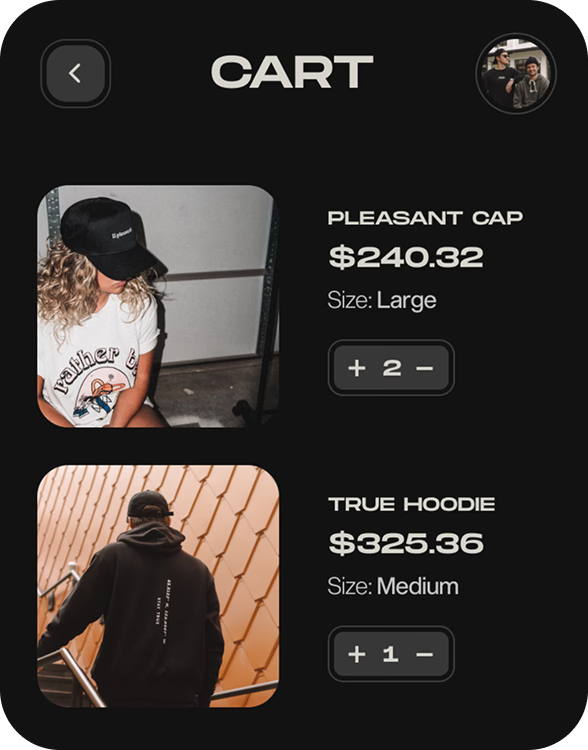
We design the structure of the future application, including user portals, roles, forms, dashboards, interface states, workflows, and key screens. We create intuitive interfaces for customers, employees, and administrators.
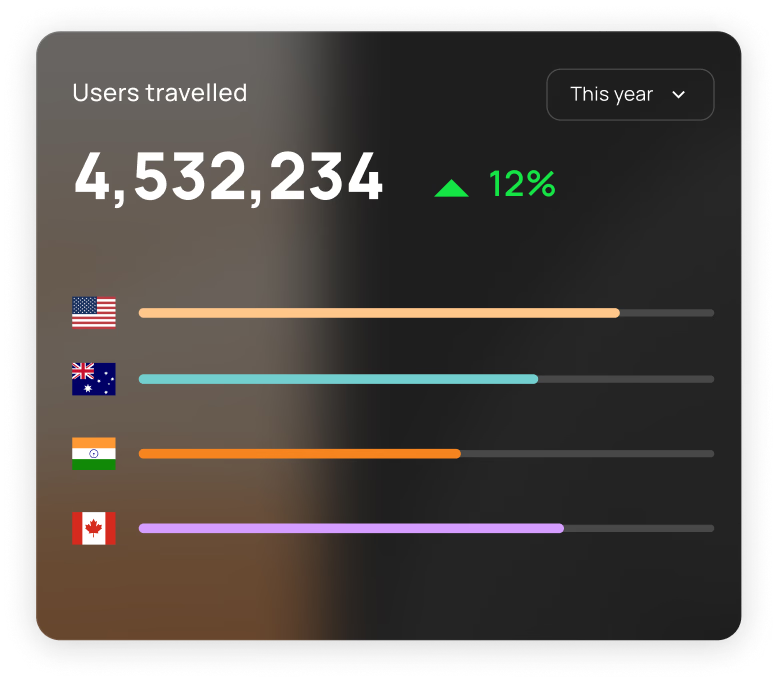

We help launch new digital products by defining the first version’s business logic, UX prototype, functional modules, user roles, and technical architecture.
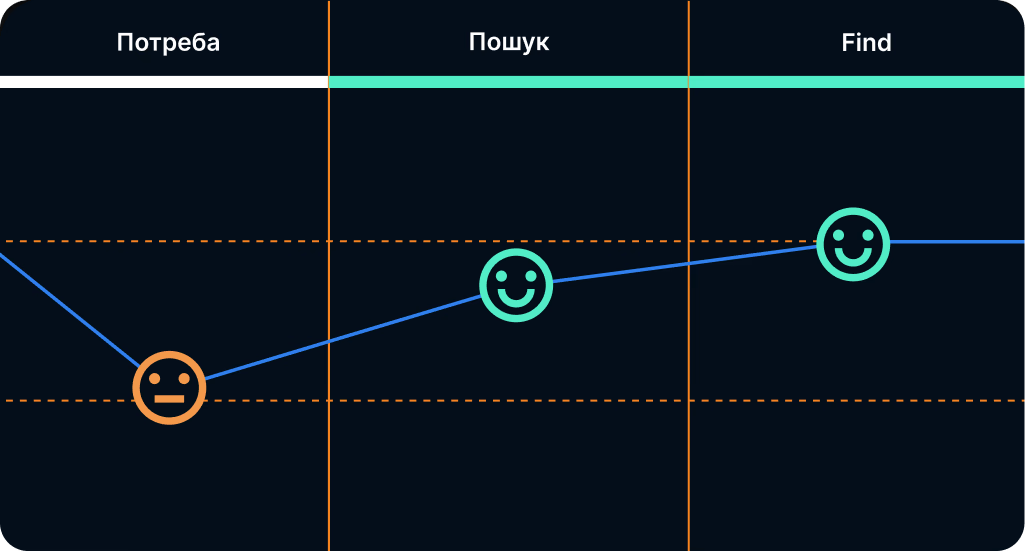
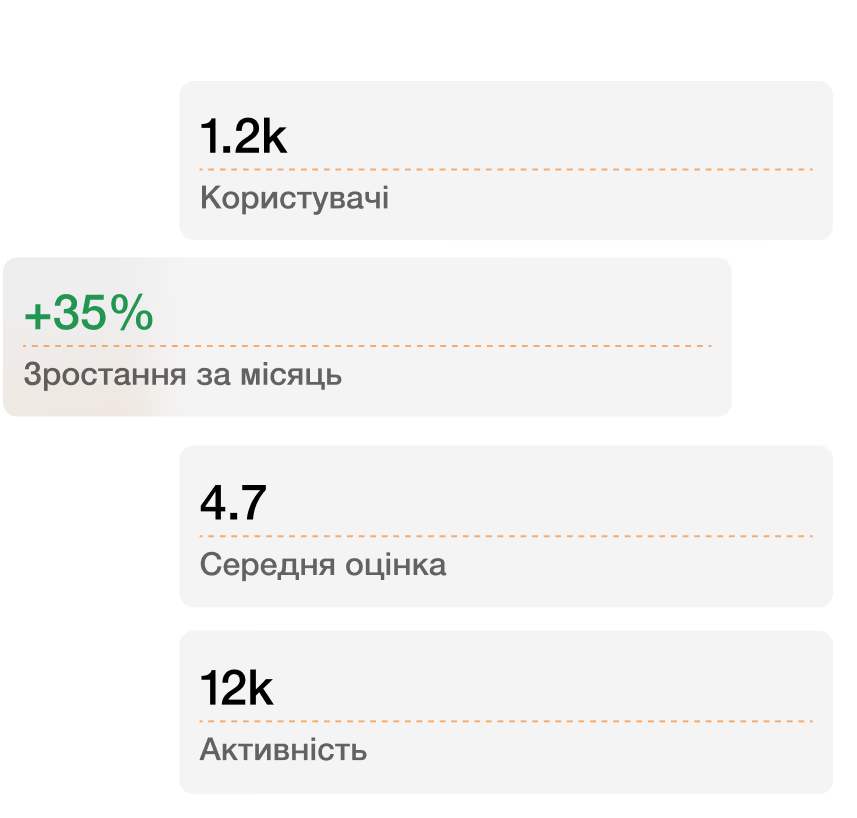
We connect web applications with CRM, ERP, POS, inventory and accounting software, payment gateways, analytics platforms, email and SMS services, external APIs, and other tools required to automate business processes.

Capabilities
What’s Included
in Web Application Development
We design each web application as a complete digital system—from business logic, user roles, and UX/UI design to user portals, backend architecture, APIs, dashboards, integrations, testing, and future scalability.
Stages
Stages
of web development
We manage the project from business requirements analysis, user roles, and application logic to UX/UI design, development, integrations, testing, launch, and ongoing product development.
We analyze business processes, project objectives, target users, user roles, workflows, data, and future integrations. We determine the specific problem the web application needs to solve.
We design the application’s logic, including user roles, user portals, access permissions, data structures, statuses, modules, APIs, and connections with other systems.
We create the structure of key screens, including portals, forms, tables, dashboards, management pages, user journeys, interface states, and interaction logic.
We create the web application’s visual design based on the brand, usability requirements, mobile experience, complex workflows, tables, dashboards, and operational interfaces.
We develop the application’s frontend and backend, user portals, roles and permissions, forms, statuses, databases, APIs, administration panel, and core business logic.
We connect CRM, ERP, POS, inventory and accounting software, payment gateways, analytics platforms, email and SMS services, external APIs, and other tools required to automate business processes.
We test the application using real-world scenarios, including authentication, access permissions, user portals, forms, data transfers, integrations, statuses, notifications, and analytics.
After launch, we can maintain and expand the web application by adding new modules, user roles, integrations, dashboards, API connections, UX/UI improvements, and functionality based on real user data.
Portfolio
Projects
in Web Applications and Digital Platforms
Explore our web applications, customer platforms, user portals, internal systems, e-commerce solutions, and B2B projects—products where success depends not only on design and development, but also on business logic, user roles, APIs, CRM/ERP, POS, inventory and accounting integrations, dashboards, and scalability.

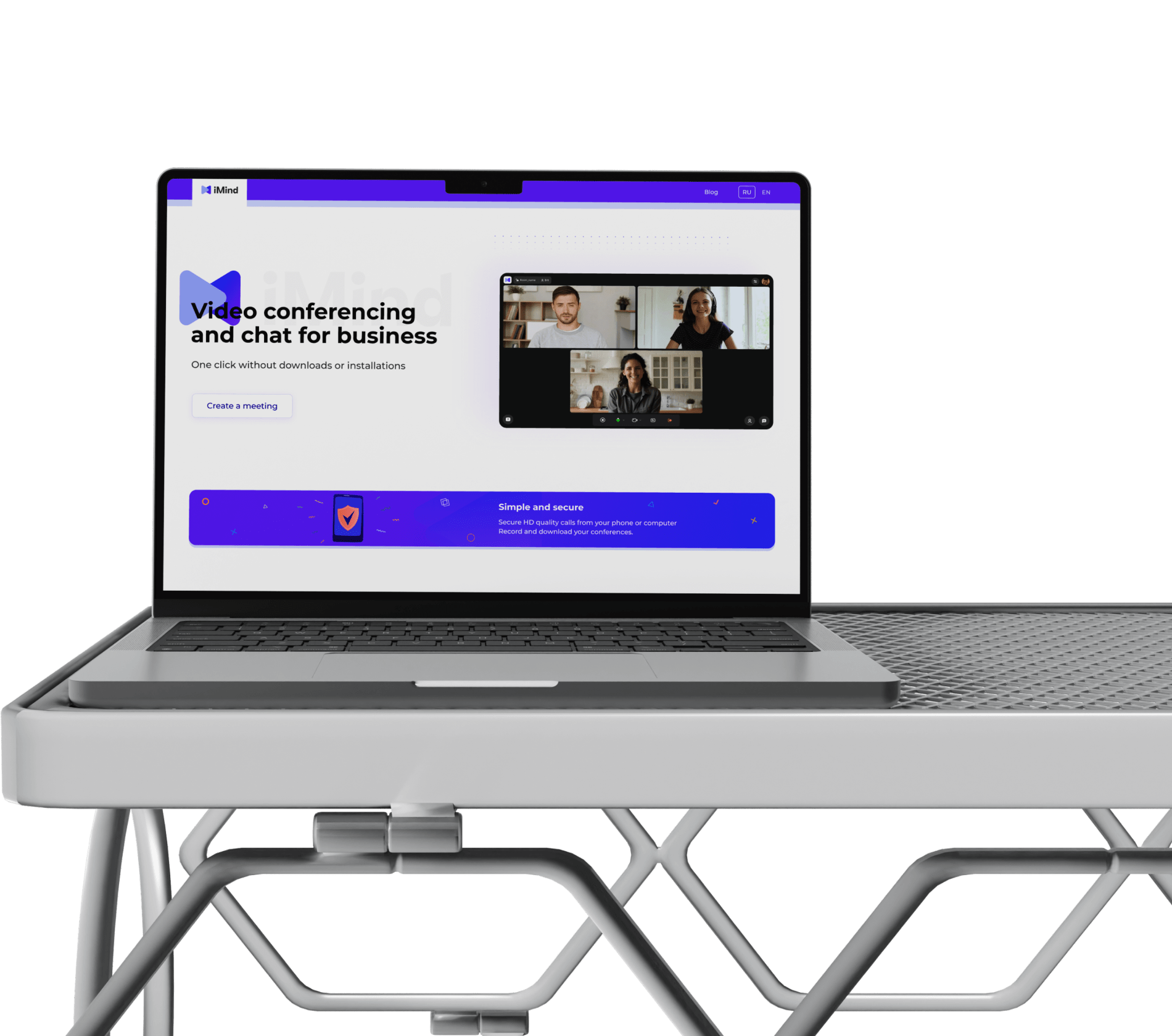
A video conferencing platform that provides secure HD calls.
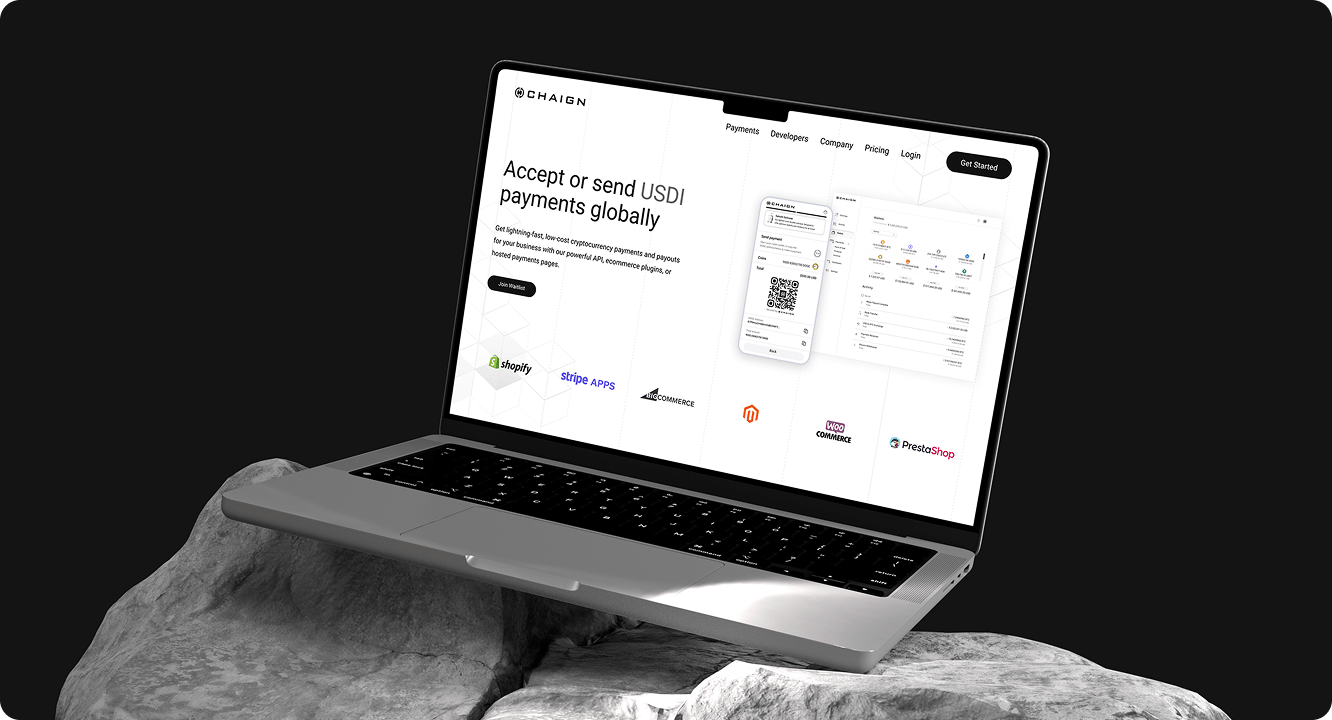

A leading educational company with over 20 years of experience.
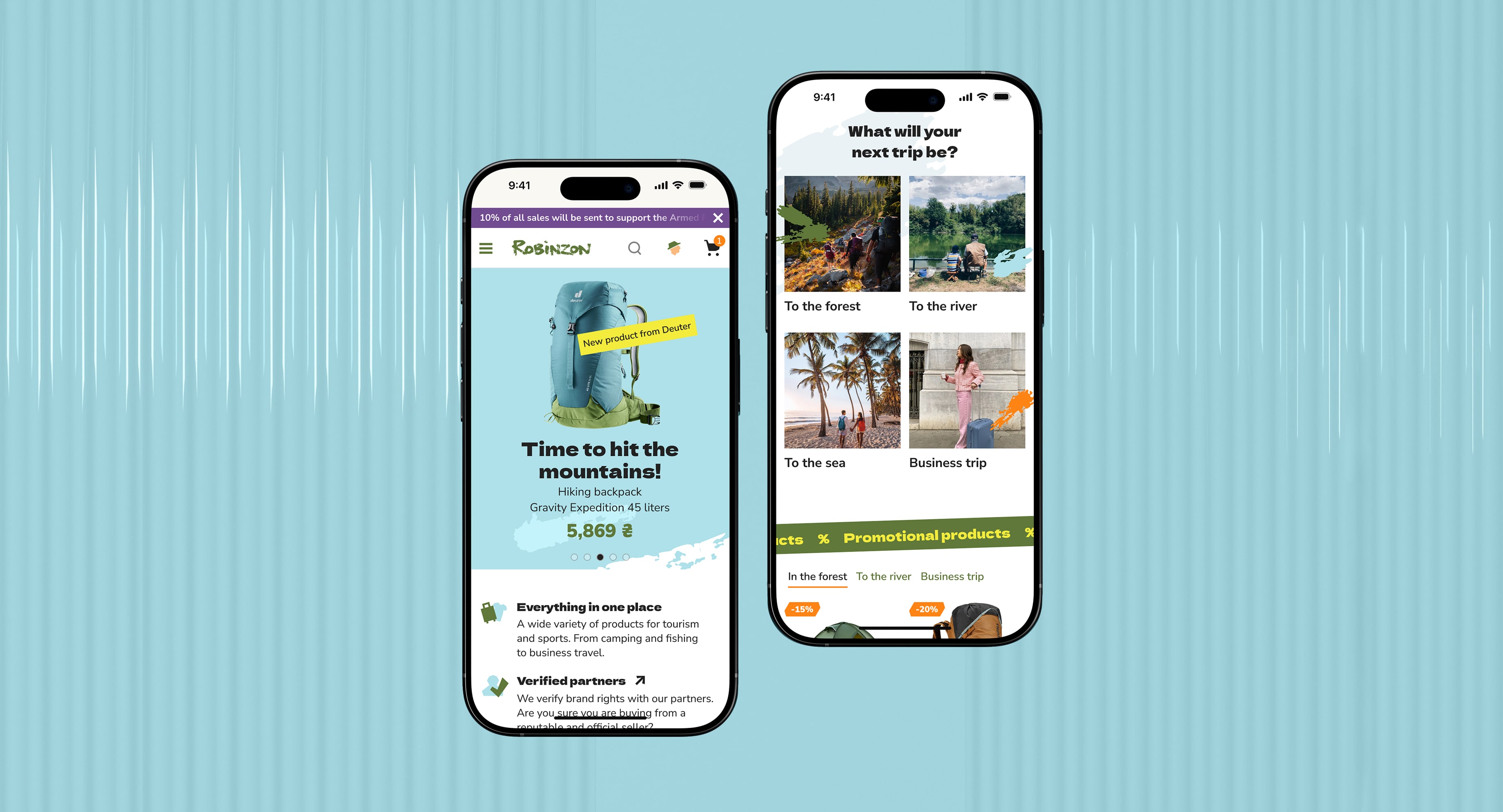
The largest Ukrainian online store specializing in selling goods for tourism.

Manufacturer of microbiological preparations for agriculture.
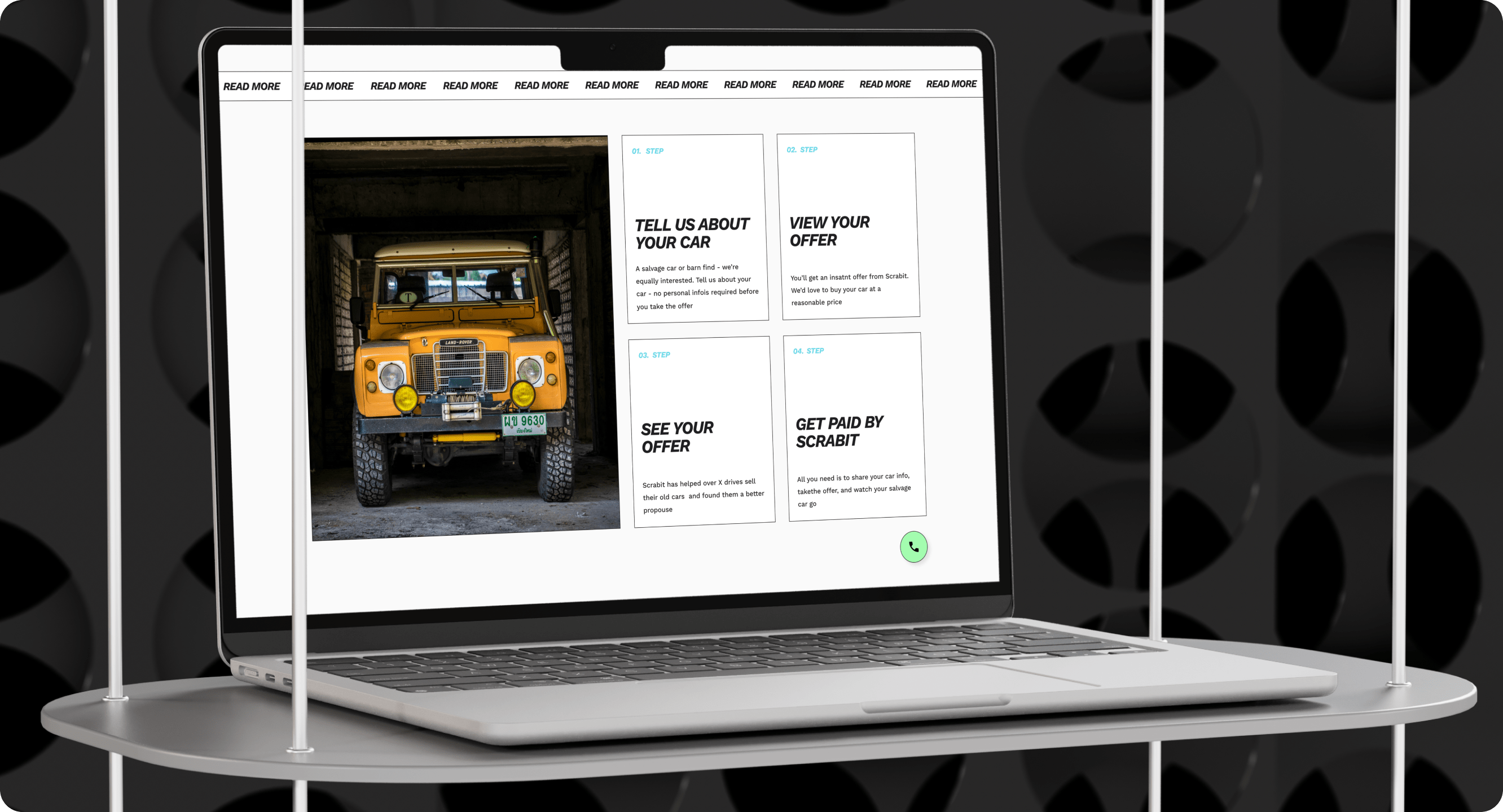
Scrabit is a digital platform that helps people sell their used or damaged cars quickly and effortlessly.
Clients
Our
clients

Professional nail and beauty products brand

Premium skincare and cosmetics brand

Online platform for selling used cars

Professional makeup brand

Sports field line-marking technology company

Freight shipping and logistics service provider

Video conferencing and online meeting platform

Cybersecurity and digital protection solutions company

Car protection and detailing studio offering PPF, tinting, and vinyl wrap services

Music and entertainment production company

AI-powered mobile game monetization platform

Blockchain and Web3 technology company
Articles
Recent
articles
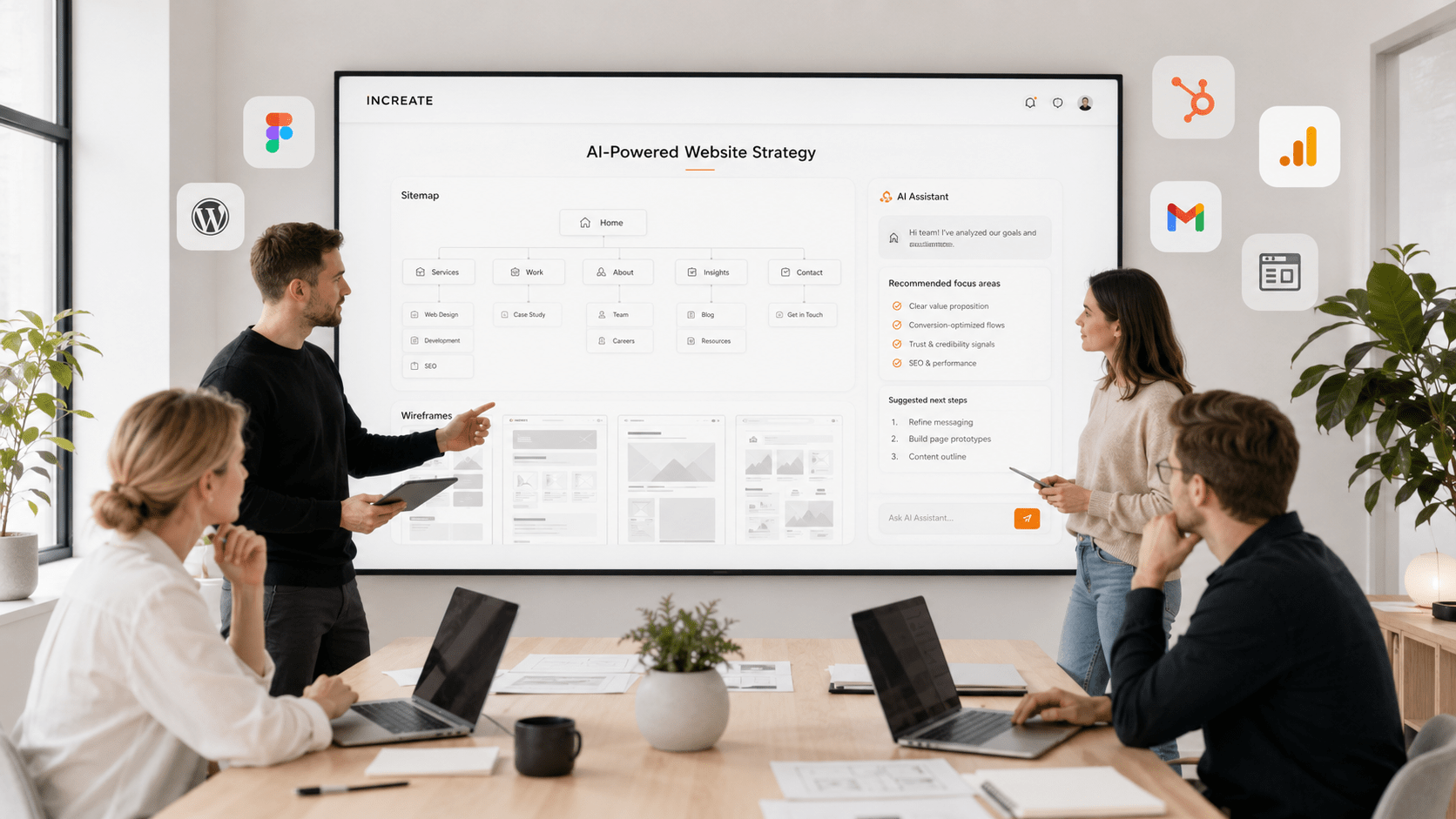
INCREATE
web production
agency
We craft fast functional web products of any scale. We translate your ideas into modern sites, platforms and applications.
Reviews
from our clients
All Reviews The result is a modern, scalable, and user-friendly website aligned with our business goals.

The design, animations, and excellent support made a strong impression.

INCREATE managed the project with a clear and transparent process. We really enjoyed working with their team.

FAQ
A web application is an online platform that helps a business automate processes and work with customers, partners, managers, or internal teams through a browser. Unlike a standard website, a web application has more complex functionality, such as user roles, accounts, dashboards, databases, integrations, statuses, reports, APIs, and automated workflows.
A web application can take the form of a customer portal, B2B portal, SaaS platform, MVP product, internal CRM system, booking platform, analytics dashboard, request management system, or custom business automation tool.
A standard website usually presents a company, its services, products, projects, or content. Its main purpose is to inform users, build trust, and generate enquiries. A web application has a different purpose: it allows users to perform specific actions within the system.
A web application may include user accounts, multiple roles, authentication, dashboards, request statuses, documents, notifications, online payments, and integrations with CRM, ERP, POS, inventory and accounting software, or external APIs. In other words, it functions as an interactive platform that automates part of a business or operates as a standalone digital product.
Full-cycle web application development may include business analysis, discovery, user-flow planning, UX prototyping, UI design, front-end and back-end development, database architecture, user portals, access roles, an administrative panel, APIs, integrations, analytics, testing, launch, and technical support.
The final scope depends on the type of web application. Some projects only require an MVP with core functionality, a user portal, and an administrative panel. Others require complex architecture, CRM and ERP integrations, connections to POS, inventory and accounting systems, dashboards, process automation, financial logic, notifications, documents, multiple user roles, and a scalable back end.
Businesses can use many types of web applications, including customer portals, B2B portals, SaaS platforms, MVP products, internal team systems, booking platforms, request management systems, dashboards, analytics platforms, user portals, partner portals, and custom CRM solutions.
A web application can also be part of a larger digital ecosystem. For example, it can integrate with a website, online store, CRM, ERP, POS, inventory and accounting software, payment processors, delivery services, analytics platforms, or external APIs.
The main purpose of a web application is not simply to provide another online tool. It should solve a specific business problem, such as automating a process, reducing manual work, improving the customer experience, or launching a new digital product.
Yes. Starting with an MVP is often the most practical approach to web application development. An MVP allows you to launch an initial working version with essential functionality, validate the business idea with real users, and avoid investing in unnecessary features at the beginning.
The MVP may include core user roles, a basic user portal, essential workflows, an administrative panel, core back-end functionality, and the minimum required integrations. After launch, the web application can be expanded with new modules, roles, dashboards, integrations, automation, analytics, and more advanced business logic.
Yes. A web application can include user portals, multiple user roles, access permissions, dashboards, statuses, notifications, activity history, documents, reports, and an administrative panel. These features are among the main differences between a web application and a standard website.
For example, customers can view their requests, orders, documents, statuses, payments, and interaction history. Managers can work with enquiries, customers, tasks, and analytics. Administrators can manage users, roles, content, system settings, and the platform’s business logic.
Yes. A web application can integrate with CRM and ERP platforms, POS, inventory and accounting software, payment processors, analytics tools, email and SMS services, external APIs, internal databases, and other business systems. These integrations automate data exchange and reduce manual work.
For example, a web application can send enquiries to a CRM and synchronize customers, statuses, documents, products, prices, inventory, payments, manager tasks, and analytics data.
Before development begins, it is important to determine what data will be transferred, in which direction, how frequently it will be synchronized, which rules will govern the process, and which system will serve as the primary source of information.
The cost of web application development depends on the complexity of the business logic, number of user roles and portals, dashboards, integrations, back-end architecture, interface design, administrative functionality, APIs, security requirements, expected traffic, and scalability plans.
An MVP web application may start at approximately $15,000–$25,000 when the goal is to launch an initial working product with essential functionality, user portals, and core workflows.
A complex web application, SaaS platform, B2B portal, or system with custom business logic, integrations, dashboards, and scalable architecture may cost $25,000–$40,000 or more. We provide an accurate estimate after reviewing the required functionality, user roles, integrations, and technical requirements.
The development timeline depends on the project’s complexity, number of user roles, portals, integrations, dashboards, administrative features, back-end logic, and overall scope.
An MVP web application may take approximately three to five months when the initial version includes the product’s essential functionality and core business logic.
A complex web application with multiple user roles, customer portals, CRM and ERP integrations, connections to POS, inventory and accounting software, dashboards, APIs, analytics, and scalable architecture may take six months or longer.
For projects of this complexity, we recommend starting with discovery, UX prototyping, and technical specifications. This helps establish priorities, development stages, budget, and a clear product roadmap.
DEVELOPING WITH INCREATE?
Click for a free consultation. Fill out the form to build an effective partnership and long-term cooperation with INCREATE
 Max KonovalenkoCEO
 Anton ChumakDigital Expert
 Sasha TymoshenkoProject Manager
 Anna OsedachUI/UX Designer
 Roman ShtaierUI/UX Designer
Web Service and Web Application Development for Businesses
When a Business Needs Web Application Development
Web application development becomes necessary when a conventional website is no longer sufficient to support a company’s requirements. A custom web application can automate processes, provide user portals, manage roles and permissions, process data, applications, documents and statuses, present dashboards, connect other systems, and implement custom business logic.
Web service and web application development is suitable for companies planning a customer portal, B2B platform, SaaS product, web product MVP, internal staff system, booking service, analytics dashboard, application management system, or another custom digital tool for business automation.
What Is a Web Application for Business?
A web application is an online platform that users access through a browser to perform actions within a digital system. Unlike a conventional website, which primarily presents information about a company, a web application contains functional logic such as authentication, user portals, role-based access, databases, statuses, notifications, reports, APIs, integrations, and administration tools.
The application can operate as a standalone business product or as part of a company’s digital ecosystem. For example, it can connect with a corporate website, online store, CRM, ERP, POS, inventory or accounting platform, payment gateway, analytics system, email and SMS service, or external API.
How Is a Web Application Different from a Conventional Website?
A conventional website generally serves a marketing and presentation function. It introduces the company, services, products, projects, team, and contact information and helps generate enquiries. A web application has a more complex purpose: it not only presents information but also allows users to interact with a system, process data, perform tasks, and automate workflows.
On a website, a user might submit an enquiry. In a web application, the user can register, sign in to a personal account, track an order, upload documents, pay for a service, receive notifications, view analytics, or complete actions according to their assigned role. This is why web application development requires more detailed planning of the business logic, technical architecture, database, and backend functionality.
What Types of Web Applications Does INCREATE Develop?
INCREATE develops custom web applications for established businesses, startups, B2B companies, e-commerce organizations, service providers, logistics, healthcare, agriculture, manufacturing, and other industries. These solutions can include customer portals, B2B platforms, SaaS products, web product MVPs, internal systems, dashboards, booking services, partner portals, application management systems, and other custom business applications.
Every application is designed around a specific business requirement. One project may need to automate staff workflows, while another requires customer accounts. A startup may need to release an MVP, validate its business assumptions, and then expand the platform gradually after launch.
User Portals, Roles, and Dashboards
User accounts and role-based access are central elements of many web applications. A system can include customers, employees, managers, partners, administrators, moderators, and other roles with different access permissions. Each role can have its own workflows, functionality, data, limitations, and methods of interacting with the platform.
A web application can include customer and staff portals, administration panels, dashboards, application statuses, activity history, documents, notifications, reports, analytics, tables, charts, filters, data exports, and business process management tools. This functionality helps reduce manual work, accelerate communication, and make company operations more transparent.
Web Application MVP and SaaS Platform
Complex digital products can often benefit from beginning with an MVP. A web application MVP provides the first functional version of a product with its core business logic. It allows the company to validate assumptions, test the product with real users, and avoid investing in unnecessary functionality during the initial stage.
The MVP can include essential user roles, personal accounts, an administration panel, primary workflows, backend logic, a database, and the minimum required integrations. After launch, the application can be expanded with new modules, dashboards, pricing plans, automation, payment functionality, analytics, APIs, and other SaaS capabilities.
Web Application Integrations with CRM, ERP, POS, Accounting Software, and APIs
A web application can form part of a wider digital business ecosystem. It can be integrated with CRM, ERP, POS, inventory and accounting software, payment gateways, email and SMS services, analytics platforms, advertising accounts, internal databases, third-party services, and external APIs.
For example, an application can transfer enquiries to a CRM and synchronize customers, statuses, documents, products, pricing, stock levels, payments, staff tasks, or analytics data. Complex projects may require CRM and ERP integration, POS, inventory and accounting software integration, or a dedicated API for exchanging data between systems.
Web Application UX/UI Design
UX/UI design is critical for web applications because people often use these systems regularly to create requests, track statuses, manage information, upload documents, review analytics, and complete operational tasks. The interface must therefore be intuitive, logical, efficient, and suitable for daily use.
During the UX/UI design stage, we plan user roles, portal structures, navigation, dashboards, tables, filters, forms, statuses, notifications, administration tools, and essential user workflows. A well-designed user experience reduces errors, shortens the path to completing tasks, and makes the system more efficient.
Architecture, Backend Development, and Scalability
Web application development requires a carefully planned technical architecture. The project should define how the backend, database, APIs, access permissions, integrations, data processing, security, logging, analytics, infrastructure, and future scaling will work.
When an application requires complex backend logic, APIs, user portals, dashboards, integrations, and scalability, custom framework development such as Laravel development may be appropriate. This approach allows us to build the platform around the required business logic instead of being restricted by the capabilities of an existing template.
SEO and Analytics for Web Applications
Not every web application requires conventional SEO, particularly when its primary functionality is available only to authenticated users. However, the public portion of the product should still have properly planned landing pages, URL structures, metadata, content, indexing rules, performance, analytics, and event tracking.
If the application includes a public website, blog, product pages, pricing pages, documentation, or SEO landing pages, they should be incorporated during the planning stage. Analytics should also track conversions, registrations, enquiries, clicks, payments, and important user actions within the product.
Web Application, Online Store, or Marketplace?
A custom web application is suitable for projects involving complex business logic, user accounts, multiple roles, dashboards, integrations, data processing, and workflow automation. If the primary objective is to sell the company’s own products online, e-commerce website development is usually the better option. If the platform must connect multiple sellers, service providers, or partners, marketplace development may be more appropriate.
During discovery, INCREATE helps determine the right project format: web application, MVP, SaaS platform, B2B portal, customer portal, online store, marketplace, or custom business system. This prevents unnecessary functionality while establishing a foundation for future growth.
How Much Does Web Application Development Cost?
The cost of web application development depends on the complexity of the business logic, number of user roles, user portals, dashboards, integrations, backend architecture, UX/UI design, administration tools, APIs, security requirements, expected traffic, and scaling plans.
At INCREATE, a web application MVP may start at approximately $15,000–$25,000 when the objective is to launch an initial functional version with core business logic, user portals, and essential workflows. A complex web application, SaaS platform, B2B portal, or system with custom business logic, integrations, dashboards, and scalable architecture may cost $25,000–$40,000 or more. We provide an accurate estimate after analyzing the requirements, functionality, user roles, integrations, and technical specifications.
Web Application Development Stages
Web application development begins with an analysis of business requirements, users, roles, workflows, functionality, integrations, data, and technical requirements. We then prepare the product structure, UX prototype, UI design, technical architecture, backend logic, integration plan, and launch roadmap.
After development, we test user portals, roles and permissions, dashboards, forms, statuses, notifications, administration tools, APIs, integrations, analytics, security-related scenarios, performance, and system stability. After launch, the product can be expanded with new roles, functionality, integrations, modules, dashboards, pricing plans, automation, and marketing tools.
Why Choose INCREATE for Web Application Development?
INCREATE develops web applications for businesses that need more than a template-based website. We create carefully planned digital products with custom business logic, user portals, role-based access, integrations, and the flexibility to scale. Our team combines UX/UI design, frontend and backend development, technical architecture, SEO structure, analytics, CRM/ERP, POS, inventory and accounting integrations, and post-launch support.
We approach each web application as part of a wider business system or as an independent digital product. During development, we consider not only interface design but also business objectives, user journeys, backend logic, staff workflows, data exchange with internal systems, security, performance, mobile usability, and future development. This approach helps create a web application that is convenient to use, prepared to scale, and efficient to expand after launch.
Something went wrong. Please try submitting the form again.